Friday, June 10, 2011

FW: Es steh Gott auf, daß seine Feind

Cantemus…


Feed: HYMNOGLYPT
Posted on: Friday, June 10, 2011 8:59 AM
Author: Matt Carver (Matthaeus Glyptes)
Subject: Es steh Gott auf, daß seine Feind


Here is my translation of the hymn "Es steh Gott auf" (C. Becker, d. 1604), a hymnic paraphrase of Exsurgat Deus (Psalm LXVIII) to be sung to the melody "Ein feste Burg," as specified in the Becker Psalter. I suppose "Reuter" would technically fit, though it is poor.


LET GOD arise, and all His foes
At once be crushed and scattered,
And all who Him with hate oppose,
Flee with their courage shattered.
Drive off every fiend,
As smoke by the wind;
As wax melted flows
When to the fire it goes,
Before God let them perish.

2. The righteous in the Lord rejoice
Joy is their constant story,
Sincerely with both heart and voice
They give their God all glory.
Make way, people dear,
Now the highway clear!
For the Lord draws nigh
Who rides upon the sky,
And we rejoice to greet Him.

3. He is the orphan's father good,
The widow's judge, defender
He is God in His high abode,
On children lone and tender
He bestows a home,
Lets the captive roam,
And in season due
All whom He finds untrue,
He sends to death eternal.

4. God, when Thou didst Thy folk precede,
In wilderness to amble,
The pow'r of heaven was shown indeed,
The earth beneath did tremble,
The ground roughly shook,
Thunder crashed and struck,
All were filled with dread
Before Sinaï's God:
The Lord, the God of Isr'el.

5. Now, Lord, Thou send'st a fruitful rain,
The grace of Thy good Spirit,
And with Thy blessing dost sustain
Faint souls who heav'n inherit,
That we creatures poor
Find a foothold sure,
Rest and peace indeed,
When Thou our souls dost feed,
O God, with all Thy goodness.

6. God's blessed Word to us is sped
By many learned teachers,
His kingdom and His splendor spread
By th' Apostles and His preachers.
The Mother at home
Into spoils is come;
The plunder is for all,
And those who heed the call
Are blest with life eternal.

7. When God's great army takes the field
To spread the reign of heaven,
Fair gifts and glory then they wield,
As bright as snow fresh-driven—
Like pure, yellow gold,—
When His truth is told
By lips of preachers dear,
In words so bright and clear,
And shines among the nations.

8. The Church is God's exalted hill,
His blessings rich enclose her.
In vain is every pow'r and will
Endeav'ring to oppose her.
For with her God resides,
Trouble flees and hides;
God shall fight for her
And He forsakes her ne'er,
The gates of hell defying.

9. A thousand chariots and yet more
God has by which to travel;
Ascending high, He broke hell's pow'r
And did its realm unravel.
The bound He reprieved,
And great gifts received
For all men, and turned
Foes who had Him spurned:
Now with His Church He dwelleth.

10. Our God be blest, who every day
Loads us with goodly burdens,
He saves us out of all dismay,
The broken heals and pardons.
A Lord we possess,
Who is glad to bless
with a saving faith,
And rescues us from death.
When then can terrify us?

11. The Lord our God shall crush the head
Of foes who Him resisted,
And o'er their skulls with anger tread,
Who in their sin persisted.
This oath yet He gave:
He some souls would save
In His earthly fold,
Who were by forceful hold
Bound deep in idols' worship.

12. Thy foot, O Lord, shall reddened be
With blood of foes ill-fated,
The tongues of dogs shall eagerly
Upon their blood be sated.
Glorious shalt Thou go
In Thy triumph-glow.
God, my King, how fair
Thy host that enters there
Into Thy holy dwelling!

13. The singers all precede Thy way
With anthems sweet and pleasant,
And those who strings and timbrel play
Within Thy train are present:
Acclaim God the Lord,
Praise to Him accord,
Thank Him here below
That He might cause to flow
From Isr'el His pure fountain.

14. From Benjamin, a princely one
Of little height God raises,
Of Naphtali and Zebulon
The rulers give Thee praises,
And Judah's high born
Him with praise adorn,
And yet many_a land
By th' Apostolic band
The Lord on high exalteth.

15. This, Lord, may Thou preserve pure,
And strengthen us, forever
To keep within Thy church secure
And see Thy works of favor.
Jerusalem's land
Where Thy dwellings stand,
Defend most graciously,
The city's Keeper be,
To Thee the kings bring present.

16. The beast among the reeds, O Lord,
Thou shalt reprove with cursing,
Shalt pay the bulls' and oxen's horde,
Their wrath on them reversing;
All their villainy
Owes a heavy fee;
Gold is their delight;
O scatter all the might
Of those who always fight Thee.

17. The princes shall from Egypt's land
Their riches be submitting,
And Ethiopia stretch his hand
To God in worship fitting;
O kingdoms, then sing
Praise to God your King,
Where above the sky
He rides on heaven high,
To sound His voice of thunder.

18. Ascribe to God all strength and worth,
Whose crown o'er Isr'el showeth;
Among the clouds His pow'r shines forth,
The Church His wonder knoweth;
Body, life, and soul
Isr'el's God keeps whole;
He gives strength and might
To those of His delight
And we forever praise Him.

Translation © Matthew Carver, 2011.

GERMAN

1. Es steh Gott auf, daß seine Feind
Plötzlich zerstreuet werden,
und all, die ihm zuwider seind,
Für ihm fliehen auf Erden,
der Gottlos verschwindt
Gleichwie Rauch von Wind,
Mit Feuersgewalt
das Wachs zerschmelzet bald,
Für Gott muß er umkommen.

2. Der Gerechte muß des freuen sich,
Fröhlich allzeit im Herren,
Von Herzengrund ganz inniglich
Singt er seim Namen Ehre,
Macht Bahn, lieben Leut,
Der Weg sei bereit,
Der Herr fährt herein
Und kehrt sanft bei uns ein,
Sein Zukunft uns erfreuet.

3. Er ist der Waisen Vater frumm,
Der Witwen Richter treue,
Er ist Gott in seim Heiligtum,
Die Einsam Gott erfreuet,
Gibt Kinder im Haus,
Führt die Gfangne aus,
Tuts zu rechter Zeit,
Die abtrünnigen Leut
Müssen zu Grund verdorren.

4. Gott, da du für deim Volk herzogst,
Gingst einher in der Wüsten,
Des Himmels Kraft sich sehr bewog,
Die Erd untr deinen Füßen
Bebt und zittert sehr,
Des Donners Stimm schwer
Hat erschrecket sie
Für dem Gott Sinai,
Der Israel Gott heißet.

5. Nu gibst du, Herr, deins Geistes Gnad,
Ein gar fruchtbaren Regen,
Dein Erbe, so ganz schwach und matt,
Erquickest du mit Segen,
Daß wir armen Tier
Stets bleiben für dir,
Finden Ruh und Rast,
Wenn du die Seele labst,
Herr Gott, mit deinen Gütern.

6. Sein liebes Wort gibt Gott der Herr
Mit großer Schar der Lehrer,
Es breiten aus sein Reich und Ehr
Der König ein groß Heere,
Die Mutter im Haus
Den Raub teilet aus,
Die Beut ist gemein,
Alle, die gläubig sein,
Solln ewig selig werden.

7. Wenn Gottes Heer zu Felde zeucht,
Das Himmelreich zu mehren,
Von Gaben schön es herrlich leucht
Und glänzet weit und ferne,
Gleich dem feinen Gold,
Wenn die Lehrer hold
Verkünden die Lahr,
So wird es hell und klar
Und leucht fern in die Lande.

8. Die liebe Kirch, des Herren Berg,
Ist fruchtbar und gediegen,
Vergebens ist all Macht und Stärk,
Die darwider will kriegen,
Bei ihr wohnet Gott,
Drum hat's keine Not,
Er streitet für sie,
Hat sie verlassen nie,
Trotz allen höllschen Pforten.

9. Viel tausend Wagen und noch mehr
Hat Gott, drauf er umfähret,
Er ist gefahren in die Höh,
Als er die Höll zerstöret,
Das Gfängnis er fing
Und Gaben empfing
Für die Menschenkind,
Bekehrt die Feinde geschwind,
Bei seiner Kirch er bleibet.

10. Gelobt sei täglich unser Gott,
Der uns ein Last aufleget,
Hilft uns doch wieder aus der Not
Und heilt, was er zerschläget,
Wir habn einen Herrn,
Der hilft herzlich gern,
Gtreu ist unser Gott,
Errett uns aus dem Tod,
Was wollten wir uns fürchten?

11. Der Herr den Kopf der Feind zerschmeißt,
Die ihm stets widerstreben,
Den Haarschädel herunterreißt
Der, die in Sünden leben,
Doch verspricht der Herr,
Er woll holen her
Und bringen zur Gmein,
Auch die gewaltig sein
Im Götzendienst verteufelt.

12. Dein Fuß, Herr, in der Feinde Blut
Wird sich färben auf Erden,
Wenn du dreinschlägst in deim Unmut,
Die Hund es lecken werden,
Du zeuchst mit großr Ehr
Im Triumph daher,
Mein Gott und König,
Dein Einzug prächtiglich
Zum Heiligtum tust halten.

13. Die Sänger gehen vorne her,
Die schön und lieblich singen,
Darauf der Spielleut großes Heer,
Die lan die Saiten klingen,
Lobt Gott unsern Herrn,
Preist ihn weit und fern,
Ihm dank die Gemein,
Daß er die Brünnlein rein
Aus Israel läßt fließen.

14. Man sieht vom Stamme Benjamin
Ein Fürsten klein erhoben,
Mit ihm die Fürsten Naphthalim
Und Sebulon dich loben,
Vom Stamm Jud' ein Hauf,
Fürsten folgen drauf
Und andre viel mehr,
Durchs apostolisch Heer
Der Herr sein Reich aufrichtet.

15. Das wollst du, Herr, bewahren rein
Und uns darinnen stärken,
Daß wir bleiben in deiner Gmein,
Zu schauen deine Werke,
Um Jerusalem,
Da dein Wohnung stehn,
Nimm dich an in Gnad,
Bewahr die heilig Stadt,
König dir Gschenk zuführen.

16. Das Tier im Rohr wollst du, Herr Gott,
Vertilgen durch dein Schelten,
Der Ochsen und der Kälber Rott
Ihren Frevel vergelte,
Alle Büberei
Um Geld hier ist frei,
Ihr Herz darauf tracht,
Zerstreu der Völker Macht,
Die wider dich stets kriegen.

17. Die Fürsten aus Ägyptenland
Kommen daher von ferne,
Die Mohren strecken ihre Hand
Zu dienen Gott dem Herren,
Drum, ihr Königreich,
Singt alle zugleich,
Denn Gott hoch geehrt
Übrall im Himmel fährt,
Seim Donner Kraft zu geben.

18. Gebt Gott Ehr, der sein Herrlichkeit
In Israel beweiset,
Sein Macht in Wolken ist bereit,
Die Kirch sein Wunder preiset,
Der Gott Israel
Schützet Leib und Seel,
Er gibt Kraft und Stärk
Seim Volk, drum Gottes Werk
Ewig wir sollen loben.


View article...

FW: Church.... Visible and Invisible

Invisible…


Feed: Pastoral Meanderings
Posted on: Friday, June 10, 2011 5:45 AM
Author: noreply@blogger.com (Pastor Peters)
Subject: Church.... Visible and Invisible


Lutherans find great temptation to focus more on the invisible Church.  In our Confessions, however, we give primary focus to the visible Church -- where the baptized people of God are gathered around the Word and Table of the Lord [Pastors are implicit in this definition].  The visible Church is not all there is to Church and this is where the invisible enters in.  We see but a snapshot of the Church -- a moment and a place as she gathers around the Word and Sacraments.  Like the horizon extends past the part captured by the lens of a camera, so the Church extend past what we see.  This is known only by faith, by our trust in the Word and promise of Christ.  On the other hand, the primary way we know Church is by hearing the Word of Christ and by seeing the community called and gathered by that Word around the font and table.

It is disappointing that so many Lutherans choose to focus more on that which we cannot see -- the invisible Church -- than we we do see -- the Church brought into being by and nurtured by the means of grace.  Those who have no means of grace are left to find the Church in other places (Protestants and Evangelicals).  Without a means of grace, apart from an efficacious Word, they are left only with an unseen Church that is known only by faith -- as an article of faith.  Lutherans are different and we need to talk and act differently.

We see the Church.  We hear the voice of the Good Shepherd calling.  We feel the splash of living water upon our dying flesh.  We taste the bread and wine.  The first thought and image of the Church for us is not that invisible part we cannot see but the visible community of faith called and gathered around the Word and Table of the Lord.

Where Christ is, there is the Church.  Where is Christ but where His name is.  Where is His name but among the two, three, a hundred or thousands He calls and gathers through the means of grace.  Where is His name but where that Word is read, spoken, and preached; where baptismal water washes us clean; where bread and wine are set apart to be His body and blood.  While we may not say "where the Bishop is, there is the Church" we do not argue with the fact that the means of grace imply and assume that the Pastoral Office is there as Christ has established, a gift to His people to provide His gifts to them.

The catholic Church encompasses all people.  This is why national flags to not belong in the chancel or by the altar.  The catholic Church possesses the truth in all its fullness -- not bits and pieces of it.  The catholic Church is the mother of all the faithful and their home (race and ethnicity are fully overcome by this unity).  The catholic Church is exclusively God's and no other place offers hope of redemption and yet she is inclusive -- calling all sinners into life with Christ without regard to race, color, national identity or economic status.  The catholic Church is the domain of the Spirit who transcends for us every earthly barrier that we may be made one in Christ.  The catholic Church exists in time but spans the ages -- neither expanding God's revelation nor growing in understanding but holding up and holding forth the Word that is yesterday, today, and forever.  The catholic Church learns from her past and lives in a constant state of renewal or reform in order to remain ever faithful and yet she does not seek or return to some pristine moment or attempt to repristinate any one time or place.

In the local congregation this catholic Church is locally represented with the riches of Christ's grace in the promise and life of the Word, water, and meal.  Though this local congregation is but a fragment of its totality, in the smallest expression as in the grandest, the fullness of the catholic Church is there.  Neither the individual congregation nor the individual Christian is alone or apart or solitary but lives in vital fellowship with the whole of this Church because of Christ and because we are in Christ.

Those who feel no urgency about the Divine Service on Sunday morning or who have separated themselves from the Church for whatever reason have a false sense of security when they cling to the invisible Church.  This is not some consolation prize when we find ourselves alone or separate ourselves from the gathered community.  It is only through our life within the visible Church that we know of and appreciate the indivisible Church.  Some have gotten it backwards.  They know the invisible Church and at times are consoled by or encouraged by visible expressions of this invisible Church but they find such visible expressions optional and not essential.  This is not Lutheran thinking or confession.

The invisible Church is known most fully in the visible community of faith, where the saints of old join with the angels and archangels and the people gathered now to sing "Holy, Holy, Holy Lord, God of Sabaoth."  Instead of this perspective, too many Lutherans think of the invisible Church as real and the visible Church as less than real.  So it is easy for us to miss the Divine Service, to not belong to a local congregation at all, or to sit at home alone and think we have not missed anything.  If we could counter this fallacy, we just might see the pews begin to fill up with those whose names are on rolls but whose bodies are absent on Sunday morning...


View article...

FW: Concubines

Salvo…


Feed: Cranach: The Blog of Veith
Posted on: Friday, June 10, 2011 4:00 AM
Author: Gene Veith
Subject: Concubines


Alan Wisdom has a brilliant article in Salvo, bringing back a word we need again and showing how different "just living together" and marriage really are:

In ancient times, there was an option for a man who desired a regular sex partner but did not wish to marry her. He could take a low-status woman as a concubine. He could enjoy her company as long as it pleased him, and he could dismiss her at any time. The man made no promises and signed no contract; consequently, the concubine had few legal protections. Any children that she bore would have an inferior legal status.

The early Church fought long and hard against concubinage. It insisted that such a sexual relationship, without the permanent and total commitment expressed in marriage vows, was immoral and unjust. Over the course of a thousand years, concubinage retreated into the shadows of social disapproval.

In the past 40 years, it seems, concubinage has come to light again under a different name. Like ancient concubinage, contemporary cohabitation is a deliberately ambiguous relationship. The partners make no promises and have no legal obligations to one another. The arrangement has no specified duration and can be terminated at a moment's notice. Those who cohabit tend to be of lower social status. Their children, on average, do not fare as well as children born to married couples.

Defenders of cohabitation portray it as just a more flexible form of marriage. The love is the same as in marriage, they say; all that is missing is "a piece of paper," the marriage certificate. Some see cohabitation as a "trial marriage." They assume that living together will confirm a couple's compatibility and reduce the odds that a subsequent marriage might end in divorce.

Social science does not support any of these assertions. By every measure, cohabitation is a very different relationship from marriage. Marriages are formed by a series of decisive, publicly announced events: A proposal is made, it is accepted, an engagement is announced, friends and family gather for a wedding, vows and rings are exchanged, and two formerly single persons are declared to be married. By contrast, many couples quietly drift into cohabitation. They gradually spend more time together, one moves his or her possessions piece by piece into the other's residence, one allows his or her lease to expire, and eventually they realize that they are living together full-time.

The two relationships differ dramatically in durability. The average marriage lasts several decades; the average cohabitation, only 15 months. Because their time horizons are longer, married people are much more likely to invest in one another. Husbands and wives almost always pool their assets. They have a single household budget that does not separate "his" and "her" money. They take responsibility for each other's debts and inherit each other's estates.

via Salvo Magazine: Cohabitation: Marriage Lite or the New Concubinage? – Salvo 15.

Read the rest of it, the differences between concubinage and marriage go on and on.  Pity the poor concubine.  Once again we see ourselves progressing at breakneck speed back to primitivism.


View article...

Thursday, June 9, 2011

FW: Fr. Christopher Smith on Praise and Worship Music Within the Sacred Liturgy

A Roman perspective…


Feed: New Liturgical Movement
Posted on: Thursday, June 09, 2011 10:00 AM
Author: noreply@blogger.com (Shawn Tribe)
Subject: Fr. Christopher Smith on Praise and Worship Music Within the Sacred Liturgy


I was rather interested to read Fr. Christopher Smith's critical analysis of "Praise and Worship" music within the context of the sacred liturgy over at The Chant Café -- I make specific note of this context because at the end of his article. Fr. Smith does propose that this form of music can have a place outside of the liturgical context.

Here is an excerpt from his article:

5. P&W music self-consciously divides the Church into age and taste groups

P&W music is principally designed based on an abstract idea of what young people like. It often reflects more the trends of the past that were germane to P&W participants' adolescence than it does the actual relevant trends of current adolescents.

It also tends to disparage the Church's musical tradition by claiming that it is too difficult, elegant, or irrelevant to teens. For them, P&W is a grassroots, democratic, egalitarian, music relevant to youth. In contrast, the Church's musical tradition is often painted as theatrical, aristocratic music for old people in concert halls.

By selectively choosing the abstract notion of youth and what is relevant to it as a criterion for liturgical music, P&W effectively divides the Church according to what is arbitrarily considered to be youthful and not youthful. It also argues that different "styles" are fine for the liturgy. This introduces into the liturgy the ambiguous notion of style and taste as a principle by which the liturgy and its music should be conducted.

6. P&W music subverts Biblical and liturgical texts during the Mass

The Roman Missal contains antiphons for the Entrance and Communion which are normally biblical texts. The Roman Gradual, which is still the Church's only official source of music for Mass, contains antiphons for the Offertory as well as for the Interlectionary Chants. These together are known as the Proper of the Mass. The Missal and Gradual also contain official texts for the Ordinary of the Mass, for the Kyrie, Gloria, Creed, Sanctus and Agnus Dei.

P&W bypasses the first and preferred option that the Church's liturgical law mandates for music at Mass, namely the Proper and Ordinary of the Mass as contained in the Church's liturgical and musical books. It substitutes hymns, which have never been part of the Roman Mass, or paraphrases or re-workings of the Ordinary. If a biblical text is used, it often has little or nothing to do with the texts appointed by the Church in the Missal or Gradual.

In doing so, P&W sets up a situation in which people do not sing the Mass (i.e., the texts contained in the Missal and Gradual), but they sing at Mass songs chosen by the impoverished criterion that those songs "kind of go along with the readings or the theme of the day." P&W divorces the music of the Mass from the Mass and substitutes in its place texts that are not or only barely Biblical or liturgical.

7. P&W music assumes that there can be a core of orthodox Catholic teaching independent of the Church's liturgical law and tradition

Many P&W proponents assume that, as long as they continue to believe in what the Church teaches in the Catechism about faith and morals, that the liturgy can be adapted to how they think such a teaching should be incarnate in song. There are some who would never think of denying an article of the Creed or promoting immoral actions condemned by the Magisterium. But the same proponents see the liturgy as another sphere. Any appeal to liturgical law or tradition is rejected according to the principles of relevance and active participation of youth.

Orthodoxy is then separated from Orthopraxis, right belief is separated from right worship. The Church's power to speak on faith and morals is upheld even as the Church's power to safeguard the liturgy through rubrics, laws and traditions is dismissed as man-made legalism. In doing so, P&W promotes an attitude of passive, or even sometimes active, resistance to the hierarchy's duty to safeguard the sacral character of the rites of the Church. The impression is created that there is such a thing as right belief, but that the idea of right worship is contrary to the Spirit of the Gospel.

This creates problems of communion between priests and their people when a priest attempts to reform the liturgy in any given place to bring it into line with the Church's liturgical law and tradition.

8. P&W music consciously manipulates the emotions so as to produce a catharsis seen as necessary for spiritual conversion

Conversion is seen principally as a dramatic emotional event accompanied by strong feelings. Recognizing that music can stimulate feelings, P&W seeks to produce liturgical events which will bring out the feelings that could in turn bring about the emotional catharsis seen as necessary to conversion. The way the liturgy is planned and the music developed is done so with an eye to aiding this conversion process.

Yet, this is not what conversion really is. Conversion is the formation of the conscience under the grace of the Holy Spirit to inform the intellect and strengthen the will to live the supernatural life of the virtues in union with Christ. Although emotions are involved in the life-long pilgrimage of conversion, their deliberate manipulation, even for an ostensible good end, is abusive. It sees the human subject not as ready for the response to a divine call, but as something to be primed for an experience. In reality, the life of grace brought about by conversion is not an experience at the level of the emotions, but a movement of the soul over and above those emotions.


Read the entire article here: Why Praise and Worship Music is Praise, But Not Worship


View article...

FW: What people want...

On liturgical identity…


Feed: Pastoral Meanderings
Posted on: Thursday, June 09, 2011 5:42 AM
Author: noreply@blogger.com (Pastor Peters)
Subject: What people want...


Funny how we condemn an idea until the same line of thinking works in favor of our own viewpoint....  I read a particularly blustery statement by the Archbishop of Glasgow insisting that he had real problems with the Latin Mass movement and that the Extraordinary Form was not getting any play in his diocese.  Nobody wanted it there...

Immediately there was an outcry from those who do not like Novus Ordo and who are in favor of the restoration of the Extraordinary Form to more ordinary practice.  One commentator, with whom I have much sympathy, sarcastically asked if it was really true that "I guess we have to take his word on that.  There are no requests from any of the people of God for the older Mass there.  Not a single priest is interested in it either.  And there better not be any interest, either.  This is 'settled practice'."

I know from whence he speaks and certainly I would resonate with the need for the reigns to be pulled in on the abuses of Novus Ordo.  What I take issue with is the the idea that one form or another depends upon the interest or desire from the people.  Whether people want Latin or the vernacular should not be the primary impetus for liturgical change.  What people want is a tyranny just as baneful as the tyranny of a particular archbishop or local priest.  "What we want" is not on the list of reasons for liturgical change or not.

If people want to clap to the sound of a vacuous song accompanied by an inept praise band or if people want to have a choir that sings the ordinary in Latin while they kneel and pray, should not determine what we do on Sunday morning.  I am not liturgical because I like it.  Personal preference is not the guiding principle.  Lutherans are liturgical because our Confessions expect, assume, and insist this is reflective of our faith and identity as Lutherans.  We do not vote to have the Mass or not, whether to sing/chant or not -- the list could go on and on -- we do these things because that is who we are as Lutheran Christians.  When we or Rome give in and allow personal preference to dictate practice, then the liturgical life of a parish will become a smorgasbord of options to fit everyone's preference or taste.  In this way the liturgy becomes the great divider instead of the place where we are united and our community identity as the Church/Body of Christ trumps our individual identities as Christians.

We as Lutherans have not had the history of a rigid uniformity like the one imposed by Trent and sustained for more than 450 years.  Maybe we should.  That is a discussion for another day.  The point is that our diversity is not simply the domain of taste or preference but reflective of the varying resources available to us (musicians, language, education, etc.).  Even when people want the liturgy and prefer it to something else, this is a weak argument and lasts only as long as the taste of the folks does not change.  Our liturgical identity on Sunday morning is rooted not in personal taste but in faithfulness to Scripture, tradition (consult how St. Paul uses that word), the means of grace, and our Confession.


View article...

FW: On baptizing infants

On Baptism…


Feed: Cranach: The Blog of Veith
Posted on: Thursday, June 09, 2011 4:00 AM
Author: Gene Veith
Subject: On baptizing infants


A good discussion about Baptism broke out at Internet Monk. Commenter Scott, as a Baptist, made some interesting points, as reposted at New Reformation Press:

While not precisely in line with any of the above confessions, there are three things that, over the past decade and a half and more as a Baptist, have struck me as wrong about the general credobaptist position.

1. Having raised some of my kids in the Baptist Church (and my youngest from birth) I'm struck that their is something almost schizophrenic about the way we treat kids. As toddlers, preschoolers, and young school age children, in Church and at home, we teach them that Jesus loves them and we raise them to love Jesus. At some point during elementary school, we change the story and we tell them that they have done wrong things and they need to tell Jesus that they are sorry and that they love him. For many of them, that's a huge disconnect. Of course they love Jesus. They've always loved Jesus. Why is he suddenly angry with them and need them to tell him they are sorry? It's a discontinuity that is not present in the churches that embrace children in Baptism from birth. Yes, the child needs to be raised in the faith and needs to make that faith their own one day. But there is no jump from you're part of God's family, now you're not, and now you are again.

2. The view is far too centered or intellect, reason, and the capacity for verbal expression to feel like anything more than a mind game — and one that is easy to deconstruct. N.T. Wright did it well in one lecture I heard. He pointed out that we all know that we can relate to and love an infant. Moreover, that infant can relate back to us and can love us. Are we really going to say that the God who created and sustained that infant cannot relate to that infant, love that infant, and that the infant cannot relate to or be filled with love for God? Really? Because I'm not willing to say that. If anything God should be able to relate to and interact with that infant even more than I can. And every infant is a unique and fully human person. And as a person, they are no less capable of experiencing God than I am. Perhaps they are even more capable. Of course, that experience needs to grow and mature. There's no magic in baptism. God will not coerce the will of the child as the child grows any more than God will coerce my will. But that makes the encounter and experience in Baptism no less real for an infant than for an adult.

3. If Baptism is an encounter with and experience of Christ, if it is a new birth of water and Spirit, if in it we are joined with Christ in his death, burial and Resurrection (all Scriptural statements) why would anyone deny their child that opportunity? Why would we leave our child open to the forces of darkness and evil who will not respect our child's will like God will? In short, if Baptism actually does anything, if it's more than just getting wet with water that has a reality independent of God, why would we deprive our children of it? On the other hand, if Baptism does nothing, if it just represents some interior reality, why do it at all? If it's just a "symbol" in the modern, secular meaning of the term, then what's the point? If Baptism actually accomplishes anything, then why deprive our children of it? If it accomplishes nothing, then what's the point? The Baptist position is truly strange to me. They hold that it merely represents a spiritual truth and is otherwise meaningless. But it has to be done by immersion past the age of reason or it doesn't count. And you have to have had a "valid" Baptism (with a lot of different variations in what makes a Baptism valid) to be a member of the Church. And that particular combination is just logically nuts. Baptism doesn't "do" anything, but you have to have done it the "right" way.

via New Reformation Press » Blog Archive » An Interesting Discussion on Baptism

HT:  Larry


View article...

FW: Credo in Deum Patrem omnipotentem

Credo…


Feed: Father Hollywood
Posted on: Thursday, June 09, 2011 1:11 AM
Author: Father Hollywood
Subject: Credo in Deum Patrem omnipotentem


"The daughter of a high Communist official, herself a Christian, learned one evening that she must face the firing squad at midnight.  Executions were frequent, and death sentences were passed on paltry pretenses, often for revenge.

This girl, before going to meet the 'midnight bride' - as execution was known - held a last supper of oat gruel and water with her cell companions....

As the girl was taken out, she raised her voice in the Creed.  Passing through the vaulted gallery, it echoed from wall to wall.  The words were those we say in church.  But it was a different Creed, because she meant every word.  She went to death for the one God and was received into life everlasting."

~ Sabina Wurmbrand, The Pastor's Wife


View article...

Tuesday, June 7, 2011

Resources Received


Walker, Riley and Marcia Pattor. Foreword by Stephen E. Ott. When the Spirit Moves: A Guide for Ministers in Transition. Valley Forge: Judson Press, 2011. 161 Pages. Paper. $14.99. www.judsonpress.com (LHP)

FW: What matters about this, I am not sure...

An honest pagan…


Feed: Pastoral Meanderings
Posted on: Monday, June 06, 2011 4:34 PM
Author: noreply@blogger.com (Pastor Peters)
Subject: What matters about this, I am not sure...


From GetReligion and  the LA Times:

.... among the leading candidates for this year's Republican presidential nomination, not one is a member of the Protestant denominations that for so long have dominated American political culture. Two of the potential candidates are Mormons (former Massachusetts Gov. Mitt Romney and former Utah Gov. Jon Huntsman Jr.); one is a member of an interdenominational evangelical church (former Minnesota Gov. Tim Pawlenty); two others are Catholics (former House Speaker Newt Gingrich and former Sen. Rick Santorum). [Rep. Ron Paul is also LCMS.] Rep. Michele Bachmann, who says she's considering the race, worships at an evangelical Lutheran church; if elected, she'd be the first Lutheran president. But no matter who wins from this list, it won't be an Episcopalian, a Presbyterian or a Methodist.

So what does this mean?  It is the Lutheran question but, unlike the answers the Catechism has given me, this one has left me with no certain answer.  A certain part of me wants to route for the Lutherans -- you know, home team and all -- but another part of me does not know what to make of the religious connection to the candidates.  The Mormons are longtime adherents to their faith.  I do not know about Pawlenty.  Gingrich is a more recent Roman Catholic convert; Santorum was raised in that faith.  Bachmann has not exactly embraced her Lutheran-ness and neither has Ron Paul made much of being the member of an LCMS parish.

I do recall Luther suggesting that better an honest pagan than a dishonest or evil Christian as a ruler.  I will leave it to others to decide how and if his words fit these candidates.  On the other side, no one is quite sure what to make of Obama's religious affiliation since he distanced himself from his former pastor and former church and has left his religious expression more to devotional tweets than actual church attendance.  So if you are thinking the religious affiliation would help you in the ballot box, I am afraid you are out of luck.  The waters are made no clearer by knowing the faith they claim than by not knowing.

In the end what will define them is their platform.  Sadly, this will not say much about the man or woman and his or her faith.  Bachmann and Paul were tied to Lutherans who rejected abortion but I am less sure that being anti-abortion is a political choice than a reflection of actual values.  It would seem that Mormons should also join the Lutherans and Roman Catholics in being pro-life but, here again, you are not so sure what or why they hold the opinions they do.

I remember a time when Americans feared that electing a Roman Catholic would mean the man on a throne in the Vatican would call the shots in Washington.  Since then, we have mostly heard Presidents and candidates tell us that they are people of deeply held religious faith and strong moral values that will not affect their decisions in any meaningful way...  Should I remind you that I wrote a column about being a monarchist at heart.... oh, well...


View article...

Monday, June 6, 2011

Pulpit Review: Hebrew and Hebrews


Wonneberger, Reinhard. Understanding BHS: A Manual for the Users of Biblia Hebraica Stuttgartensia (Subsidia Biblica 8, Third, Revised Edition). Rome: Editrice Pontificio Istituto Bilico, 2001. 104 Pages. Paper. http://www.biblico.it/pubblicazioni/subs_biblica.html (P)

Vanhoye, Albert. Structure and Message of the Epistle to the Hebrews (Subsidia Biblica 12). Rome: Editrice Pontificio Istituto Bilico, 1989. 120 Pages. Paper. http://www.biblico.it/pubblicazioni/subs_biblica.html (P)


My first exposure to both Koine Greek and Biblical Hebrew was at Seminary. For one reason or another, my comfort with Hebrew was greater than my skill with Greek. In contrast, the critical apparatus of BHS was and remained more of a mystery to me than that of USB4/NA27. Both of these volumes from Subsidia Biblica were a blessing to me and hopefully will serve you well, too.


Understanding BHS grew out of "the rather simple idea that grouping text-critical symbols according to their functions would bake it easier for students to understand the principles of the apparatus" (v). This makes perfect sense. Its other goals?
  1. to enable beginners to gain access to the language of the text apparatus of BHS and to the Masoretic apparatus as well; [QBR: Did you know there were two?]
  2. to document the apparatus language of BHS in its entirety and to provide references to the Old Testament text wherever possible; [QBR: That completeness makes this a singularly unique resource, as well as mindful of the nature of the text we are studying.]
  3. to propose a new concept of dealing with the apparatus of BHS and thus to advance the science of publishing critical editions of a text. [QBR: This goal gives the ideas Wonneberger presents and Daniels translates more impact in publishing and academia.]
(back cover)
I particularly appreciated Chapter 4, Critique, for pointing out "the abilities and limitations of BHS" with a mind to "pave the way for the further development of Biblia Hebraica" (58). Similarly, Appendix A (69ff) helped me mentally connect main sources and better comprehend the hierarchy of text-critical functions. The table of corrigenda (74ff) is indispensable. (One may note a minor typo, "untoucheed," in the middle of vii.)

I recommend Understanding BHS: A Manual for the Users of Biblia Hebraica Stuttgartensia to seminarians as well as pastors in the parish.


You may have been wondering, "How can volume 8 be dated 2001 and volume 12 come from 1989?" That's relatively easy to answer. Wonneberger's work is now in its third edition. The original German edition was published in 1984.


Vanhoye is a great guide to the Epistle to the Hebrews. Rather, I should call it the Sermon to the Hebrews. As the Headmaster of a Classical Lutheran school, I look forward to expanding use of Structure and Message of the Epistle to the Hebrews as a high school text for Rhetoric classes. I also look forward to sharing Vanhoye's structure, insights, and translation with our Sunday Bible Class this fall.

I greatly appreciated his identification of inclusion (20, et al), concentric symmetry (33ff, et al), his overall outline of the structure of Hebrews (40a-b), the visual Gospel of the cross (+) as the transformation of former barriers (-) as he does on 70-71ff. 

The publisher is to be commended for reprinting the "General Outline of the Epistle to the Hebrews" on cardstock for use as a bookmark while studying Vanhoye's translation in detail. One will note immediately the unique indentation format that could easily be expanded and applied to the original Koine Greek text.


Both of these resources are worth your study time and book budget. God bless you in your search for them and in your study of them.

While we encourage our readers to purchase directly from the publisher when possible (see above), supply and affordability are important considerations. Brother pastors encouraged me to share with you the Vanhoye book's availability and budget friendly price at Loyola, http://www.loyolapress.com/a-structured-translation-of-epistle-to-the-hebrews.htm, rather than http://www.amazon.com/Structure-Message-Epsitle-Hebrews-Subsidia/dp/8876535713/ref=sr_1_2?s=books&ie=UTF8&qid=1307303670&sr=1-2.


The Rev. Paul J Cain is Pastor of Immanuel Lutheran Church, Sheridan, Wyoming, Headmaster of Martin Luther Grammar School, a member of the Board of Directors of The Consortium for Classical and Lutheran Education, Wyoming District Worship Chairman, and Editor of QBR.

FW: Sancti Spiritus adsit nobis gratia

Cantemus…


Feed: HYMNOGLYPT
Posted on: Monday, June 06, 2011 1:42 PM
Author: Matt Carver (Matthaeus Glyptes)
Subject: Sancti Spiritus adsit nobis gratia


Here is my translation of the alternate Sequence for Holy Whitsunday, "Sancti Spiritus adsit nobis gratia," according to the version found in Lossius' Psalmodia (1579). Note all the musical lines repeat except 1, 13, and 14.

MAY THE GRACE of the Holy
Ghost be with us now.

2a. May He our hearts re-fashion
as His own holy dwelling-place.
2b. Expelling from them every
spiritu'l vice and wickedness.

3a. Nourishing Spirit,
all mankind's Enlightener!
3b. Purge from our senses
all shades of obscurity,

4a. O holy Lover of the prudent,
ever keep us in Thy care;
4b. Pour out Thy gracious unction on us,
with it fill our heart and mind.

5a. Thou Cleanser, who makest pure every
shameful and gross impurity,
5b. O Spirit, now cleanse and purify
of blindess man's interior eye.

6a. Let our Lord and Creator
Show Himself to us evermore,
6b. Who is visible only
Unto the eye of the pure in heart.

7a. Thou didst inspire the true Prophets
To proclaim the Messiah,
And His Gospel all-glorious.
7b. Thou didst inspire the Apostles
Christ's own banner to carry
To the earth's farthest boundaries.

8a. In the beginning, when God created
Heaven, earth, and sea in wondrous symmetry,
8b. Thou o'er the waters, O Spirit, hov'ring,
Scatteredst abroad Thy breath of godliness.

9a. Thou by enriching waters dost quicken
souls of men again.
9b. Thou by Thine exhalation dost render
mankind spiritu'l.

10a. Thou, Lord, hast reunited
men once divided
In their rites and languages.
10b. Calling, O Best of Masters,
Back the idolater
To Thy worship orthodox.

11a. Wherefore, O Holy Spirit,
be Thou propitious ,
and hear us, Thy humble supplicants,
11b. For without Thee our every
prayer is empty
and odious in the ears of God.

12a. Thou, O Spirit, who by Thine inspiration
hast instructed and taught the saints of
all ages in Thy breath of godliness.
12b. Who this day didst endow Christ's own Apostles
With a gift unknown and unheard of,
Unlike the gift of any age in history,

13. Thus didst Thou
Make this day so glorious.

14. May the grace of the Holy 

Ghost be with us now.

Translation © Matthew Carver, 2011

LATIN

1. Sancti Spiritus adsit
nobis gratia:
2. Qui corda nostra sibi [< Quae…] faciat habitaculum.
Expulsis inde cunctis vitiis spiritabilis,
3. Spiritus alme illustrator hominum,
Horridas nostrae mentis purga tenebras,
4. Amator sancte sensatorum, semper cogitatuum.
Infunde unctionem tuam clemens nostris sensibus.
5. Tu purificator omnium flagitiorum Spiritus.
Purifica nostri oculum interioris hominis.
6. Ut videri supremus genitor possit a nobis.
Mundi cordis quem soli cernere possunt oculi.
7. Prophetas tu inspirasti, ut praeconia Christi praecinuissent inclyta.
Apostolos confortasti, uti trophaeum Christi per totum mundum veherent.
8. Quando machinam per verbum suum fecit Deus coeli, terrae, marium.
Tu super aquas foturus eas, numen tuum expandisti Spiritus.
9. Tu animabus vivificandis aquas foecundas.
Tu aspirando das spiritales esse homines.
10. Tu divisum per linguas mundum et ritus adunisti, Domine. [= adunasti…]
Idolatras ad cultum Dei revocas Magistrorum optime.
11. Ergo nos supplicantes tibi exaudi propitius sancte Spiritus.
Sine quo preces omnes cassae creduntur et indignae Dei auribus.
12. Tu qui omnium saeculorum sanctos,
Tui numinis, docuisti instinctu amplectendo, Spiritus.
Ipse hodie Apostolos Christi donans munere insolito et cunctis inaudito seculis.
13. Hunc diem gloriosum fecisti.
14. Sancti Spiritus adsit nobis gratia.


View article...

FW: Baptism, Confession and Absolution

Baptism…


Feed: Pastoral Meanderings
Posted on: Monday, June 06, 2011 6:12 AM
Author: noreply@blogger.com (Pastor Peters)
Subject: Baptism, Confession and Absolution


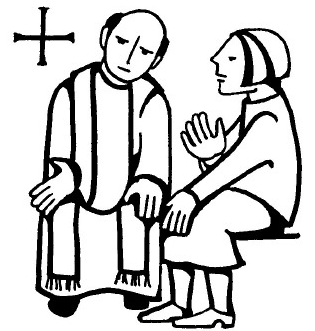
There are many Lutherans who lament the loss of individual or private confession and absolution from the life of the Church.  Even where it does exist, it lives more on the fringes than the center of the Church's life or the life of the individual Christian.  Though many have suggested that the demise of confession and absolution has to do with the way see sin, I wonder if it is not also related to how far baptism is from our lives and from our piety.

Confession and absolution are the practical way in which baptism is lived out in the daily life of the Christian.  It does not necessarily stand completely upon its own in this way but flows from baptism and extends the baptismal event into the present moment.  To daily die to sin and rise to the new person you are in baptism is not primarily a mental activity but the practical and concrete domain of confession and absolution.  The call to daily repentance is not a call to prayer but a call to live out this baptismal identity through regular confession and absolution.

I am not speaking of a new law or command here but that which flows naturally from baptism.  Perhaps this is why we Lutherans have trouble explaining what our baptism has to do with our daily life -- other than the mental remembrance that I am baptized.  We talk a great deal about baptism but for most Lutherans baptism remains an event caught in time, it is something that took place but whose consequences and effects are not easily connected to the present moment and to this day and this life.  We have problems seeing the value of or experiencing the gift of confession and absolution because baptism itself is so far from our Christian identity and the practice of our faith.

Strange, isn't it, that we Lutherans tend to be more at home in an evangelism program borrowed from D. James Kennedy or in a stewardship program borrowed from the Baptists or in a "liturgy" and songs that come right out of the latest non-denominational setting than we are in private confession and absolution?  The general confession and absolution (or its declaration of grace) that takes place publicly as the preparation for the Divine Service is a relatively new addition in comparison to the ancient practice of private confession.  Perhaps the strength in numbers gives us the courage to own our sins and express the contrition and sorrow of our Christian heart.  In any case, the place of confession and absolution is far removed from the lives of the ordinary Lutheran -- not at all similar to the situation in the first century or more of the Reformation.

We could suggest that we are afraid of being painted as "Catholic" or that we would go if we needed it but we don't need it, but I wonder if the real problem is more related to baptism and how we understand the living out of our once for the rest of our lives baptismal event.  Where baptism lives strong in our hearts and in our thinking and in our piety, confession and absolution flow naturally forth.

Over the years I have had any number of folks wonder why we might leave out the public confession and absolution on Sunday morning when there is a baptism scheduled for that service.  It is worth reminding that the liturgy of baptism and our remembrance of that baptism as we watch another claimed by water and the Word are itself an event filled with confession and absolution.  Not the same, for sure, but connected.  Then again, as one woman put it to me so long ago, "Why did you omit the confession because of that baptism?  I needed that confession and absolution."  When I pointed out the connection between confession and absolution and baptism, she wondered what "some kid's baptism had to do with her?"  When I offered to schedule private confession and absolution, her reply was, "I don't need it that bad."  Therein lies the problem.  It is not simply a confession and absolution issue but a baptismal one.


View article...

LHP Review: What the Bible Teaches


Radkey, Tim and LeeAnn, Carl and Heidi Roth, Robert C. Baker. Marriage By God's Design (Complete Kit). St. Louis: Concordia, 2010. 1 Leader's Guide. 10 workbooks. 4 video DVDs. 1 Promotional Poster. $149.99. www.cph.org http://cph.org/t-topic-marriage.aspx  (LHP)


My first reading of this material was all by myself. I was pleased with what I read and saw. And so I took it to work.

On Thursday evenings in February, our congregation used Marriage by God's Design as a marriage enrichment Bible study. The term was chosen carefully. That way, no couple had any excuse that they couldn't use "enrichment."

Overall, our participants were pleased as well. Take a look for yourself...

The Introduction for the Video Series:


The best video moments? They were when you could see the new President of Synod and his wife at their vulnerable, human, humorous best. I won't spoil the surprise, so listen to the DVDs for when the Harrisons say that they never contemplated divorce...


The Trailer for the Video Series:


Each of the four sessions has clear, Biblical, and achievable objectives. 

An icebreaker can be a way to start as couples trickle in or at the scheduled start time. Our participants weren't wild about the TV matching each week, but I could see how this would appeal to younger couples. I would recommend that downloadable alternate icebreakers be made available.


The Leader's Guide introduces video segments well. Videography and content is well-done. And participants may feel more willing to share once they've heard other couples on the DVD. I found myself coming up with alternate review questions for after the video to supplement those in the workbooks. This would be a natural place for the publisher to suggest additional questions to spur on discussion and sharing.


As a pastor, I loved the detail and insight given in the gray boxes that explained difficult passages and Hebrew or Greek words. They made my job easier.


We had planned for 90-minute sessions. Advertising 120 minute sessions would be more realistic, and we could have finished early every time. 


I had considered offering session 4 before session 3, but saw 4 as a more satisfying ending than 3. Our participants were sensitive to the unique life situations of our participants. Some singles attended. Nearly all our couples finished the course together. Some marrieds attended one or more sessions without their spouse. All showed respect and care for the widowed, childless, and single.

What the Bible Teaches about Marriage

Marriage by God’s Design is a four-session, DVD-based study that examines the Bible’s teachings on marriage. Perfect for large or small groups, this resource can also be used for marriage preparation classes, marriage renewal retreats, or for a congregation-wide study on marriage.

The Bible begins with a marriage—Adam and Eve in the Garden of Eden—and ends with a marriage—the marriage feast of Christ and His Bride, the Church. Throughout its pages, the Bible explains why God created His human creatures male and female and why He instituted marriage for them. Because Marriage by God’s Design focuses on the Bible, participants will learn and grow in the understanding and application of its teachings concerning married—and single—living.


Kit includes:

  • 1 Leader Guide
  • 10 Participant Workbooks
  • 4 DVDs
  • 1 Promotional Poster


Visit www.cph.org to purchase additional/replacement workbooks and leader guides and to download bulletin inserts and printable posters.

Our congregation plans to offer this study about twice a year. We are considering four evenings in a row from Sunday through Wednesday or Monday through Thursday with a date night on Thursday/Friday, four consecutive Sunday afternoons, as a four-week study during our regular Midweek Bible Class slots, or once a month over four months. It would also be a great addition to my current premarital preparation course. We plan to use a variety of days and times to reinforce what the Bible teaches about marriage by continuing to use Marriage by God's Design.


The Rev. Paul J Cain is Pastor of Immanuel Lutheran Church, Sheridan, Wyoming, Headmaster of Martin Luther Grammar School, a member of the Board of Directors of The Consortium for Classical and Lutheran Education, Wyoming District Worship Chairman, and Editor of QBR.

LHP Review: Hairy Situations and Icky Fun


Schkade, Jonathan. Art by Tuesday Mourning. Icky Sticky, Hairy Scary Bible Stories: 60 Poems for Kids. St. Louis: Concordia, 2011. 128 Pages. Paper. $14.99. www.cph.org (LHP)

Oberdeck, John. Eutychus Youth: Applied Theology for Youth Ministry/Reaching Youth on the Ledge. St. Louis: Concordia, 2010. 270 Pages. Paper. $19.99. http://www.cph.org/ (LHP)


Boys are gross.

Girls are complicated.

These two assertions summarize my life experience and time as a pastor doing marriage counseling. The are also true for youth ministry and in my role as Headmaster of a classical Lutheran school.

Two great books for serving young people are the focus of this review.


I recently recommended Icky Sticky, Hairy Scary Bible Stories: 60 Poems for Kids  to my Sunday morning Adult Bible Class. I was also reminded that the Bible is not a PG book. Remember last Sunday's reading from the last half of Acts chapter 1? 

Poet Jonathan Schkade is a boy at heart. The dedication sets the tone for this book: "For Daniel, Josh, and Nathan And for every kid who's ever said , 'Ew, gross!' and then smiled..."

I was particularly impressed that the author's poems helped the usual "girliness" of Tuesday Mourning's art turn to the gross "darkside" of boydom. 

:)
IF YOU DARE!
Learn about the Author and Illustrator
Download for FREE
  • games
  • posters
  • coloring pages
  • bookmarks
  • tips for teachers (Source: publisher's website)

I was thrilled to see this book in our local Christian bookstore. Let's call it a good start.

Icky is incarnational. God loves us in Christ and has pulled us out of some sticky situations. Sin is not at all funny. The transition to Hairy with Elijah shows the author's grasp of the real meaning of the Hebrew of 1 Kings 18. Impressive. Totally inappropriate for a sermon. Yet unmentionably gross and interesting at the same time. This book will make some folks' skin crawl. Just remember: piety...good; pietism...not so much. :)

We were beginning a new Bible Study this last Sunday morning. We were reading Luther's advice on being a theologian: oratio, meditatio, tentatio; roughly translated: prayer, meditation/"inwardly digesting," trials. Luther concludes that portion of Luther's Works, Volume 34 with a great deal of sarcasm and "long donkey ears." Lutheran humor is largely unappreciated by Lutherans. Usually, we tend to smile as loud as we can. Perhaps a rediscovery of Luther's own humor alongside Schkade's book will help us laugh at ourselves and our old evil foe.

Watch Concordia's impressive YouTube video for the book:


Buy it for the boys in your life. Even if they're starting to get gray hair. This is a perfect Father's Day gift!


Eutychus Youth is a strange title for a book.

I LOVE IT!

It grabs your attention and generates interest without using too many of the "ing" words ubiquitous in book titles in Christian publishing.

Author John Oberdeck doesn't sell out to fads, trends, easy answers, or empty promises. Youth ministry is hard work. Our youth are on the edge/ledge. Like young Eutychus of Acts 20:7ff, young people are immature, bored, and at risk.
Who is this product for?
The author encourages pastors, Directors of Christian Education, youth ministry volunteers, college or seminary students or anyone who has an interest in youth ministry, adolescent development, and practical theology to read this book. 
 
What does this book provide?
This book examines what Lutheran theology adds to the whole field of youth ministry that isn't found elsewhere.  It begins with an introduction to Eutychus, who is a paradigm of adolescent development.  The book chapters are divided into three sections:
  • An overview of youth, youth ministry, and spirituality
  • Lutheran theology's unique contribution to youth ministry
  • Putting Lutheran theology's strengths to work in youth ministry
 
Who is the author?
Rev. Dr. John W. Oberdeck is Professor of Theology and Assistant Director for Lay Ministry at Concordia University, in Mequon, Wisconsin.  He holds a M.A. in Education and Ph.D. in Educational Psychology.  Oberdeck has also served as a parish pastor and on the faculty of Concordia Seminary, St. Louis.

Oberdeck knows the academic literature about youth today and recent generations. You can read the sociological footnotes if you wish, but his greatest contribution is framing ministry to youth in a solidly Lutheran theology and practice. 

Youth feel abandoned and are exploited by our culture (37). Lutheran spirituality is grounded in Scripture and the means of grace, and avoids moralism, speculation, and mysticism (64ff). Lutheran youth ministry needs Law and Gospel (76ff). Our focus is on baptismal identity, not mere works. Again, Higher Things excels in this regard as an LCMS RSO. Lutheranism is (sadly) theologically unique in is Christ-centered, Gospel-focused worldview. I commend the author for pointing out the strengths of the Walther League. The book is strong on vocation (183, et al). The eight question checklist beginning on 197 will be a great help to pastoral and lay youth volunteers and leaders. 

Chapter 13 is a great summary of the book. If you have a chance to see this book in person before you purchase it, reading this one chapter will convince you of the need to read, mark, learn, and inwardly digest Eutychus Youth. And share it with others in your family and congregation.


We believe in miracles as Christians. Icky Sticky, Hairy Scary Bible Stories is a fun reminder of that spiritual truth. 

I love to see our young people on Sunday mornings. It is sad when some follow the path of least resistance and imitate the example of a non-believing parent. When they come on their own? Priceless. And miraculous, God at work.

Eutychus was raised from the dead. That is miraculous. And so is the gift of faith in young and old. I pray you and your congregation's young people will be blessed by these resources from Concordia. 


The Rev. Paul J Cain is Pastor of Immanuel Lutheran Church, Sheridan, Wyoming, Headmaster of Martin Luther Grammar School, a member of the Board of Directors of The Consortium for Classical and Lutheran Education, Wyoming District Worship Chairman, and Editor of QBR.