Smith, Matthew. Watch the Rising Day. Audio mp3 album. www.matthewsmith.us (H) Shaw, James. Quick and Easy Bible Studies on 600 + Hymns. St. Louis: Concordia, 2011. pdf and rtf computer files on CD-Rom. $149.99. http://www.cph.org/p-19304-quick-and-easy-bible-studies-on-600-hymns.aspx (LHP) Hymns are making a resurgence in American Christianity. My best explanation of what is happening is that those of my generation and younger want song of substance when we sing of and to Christ. I suppose we of the Lutheran tradition have taken it for granted that we sing and pass on the songs, hymns, and spiritual songs of Christendom. Not every congregation or every Christian tradition have the same blessing. Some congregations and Christian traditions abandoned old song and old forms of worship for the "latest and greatest" of a given time and place. You could say with a professor of mine, "Live by the sword, die by the sword." Matthew Smith and Indelible Grace are examples of those who are reviving hymns because they were not taught them as young children. Their rediscovery of some of the oldest and most "traditional" songs of their Christrian tradition is coupled with new melodies for older texts. I also pray and hope that traditional tunes and harmonies would not be totally lost. Arrangements make use of more 5 and 2/9 chords rather than only straight Major or minor chords. Instrumentation is rather modern for my taste. Percussion often only homogenizes the songs. I am impressed at the rich Gospel message and Christocentricity of these resurgent hymns. "Matthew Smith is a Nashville-based singer-songwriter who writes brand new music to centuries-old hymn texts. He finds beauty exploring the tension between joy and sorrow, between the Already and the Not Yet." (Artist's website) We at LHP QBR were contacted by Matthew. That is a great honor for us. Smith begins with texts written by Charles Wesley, Bernard Barton, Frederick Whitfield, Johann Rist, Mary Bowly-Peters, Henry W. Baker, William, Cowper, John Newton, Horatius Bonar, and others. Smith's update of the text may include the addition of a bridge and/or a chorus. His melodies are listenable, approachable, and singable. His vocal approach is very reverent. An album download also includes PDF chord charts of all 10 songs, plus 4 bonus charts. Consider the album's contents:
This is the 10-song standard edition of WATCH THE RISING DAY. For the 14-song Deluxe Edition, please go to matthewsmith.bandcamp.com/album/watch-the-rising-day released 17 August 2010 (Artist's website) We'll be looking and listening for more by Matthew Smith. Matthew Smith also included an album by Indelible Grace. According to their website,
Click Here To Learn More About Indelible Grace... Indelible Grace is an outgrowth of Reformed University Fellowship. The Link above gives more about their history and how they have re-embraced hymns. Their website allows visitors to download a large resource of hymns in pdf to try for yourself.
The Hymn Sing: Live In Nashville Immediate download of 18-track album in your choice of MP3 320, FLAC, or just about any other format you could possibly desire.
A double-disc live album from the Indelible Grace Hymn Sing at the historic Ryman Auditorium in Nashville, June 30th, 2010. released 29 November 2010 (Group's website) My impression of the singers and instrumentalists is that they love and care about these texts for the sake of the truth they confess in Christ for the sake of those who would hear them and sing along. Listeners will hear about the history of the texts, tunes, authors and composers (2, 5, 8, 11, 16). This is an important part of the process of recovering and reclaiming hymns. Many traditional hymn melodies have no need of overwhelming or even subtle percussion because of their inherent pulse. This may be something for groups and artists to consider as they reclaim hymns texts and their historic tunes. I ask Indelible Grace for the opportunity to review their previous albums under our continuing theme "Hymnody Resurgent." Our final hymn resource for this review is an electronic resource from Concordia Publishing House. "Quick and Easy Bible Studies on 600+ Hymns provides a series of easy-to-use, one-page Bible studies on the Scripture references of each hymn in the Lutheran Service book. Each study page is divided into discussion, application, and summary sections. The CD-ROM includes teaching materials and offers student materials in two formats: PDF and RTF." (Publisher's website) I must admit, reluctantly, some disappointment with this resource. I write as both a reviewer (who received a complimentary review copy) and as a purchaser (for our congregation to use for Bible Class on Sundays when I am away for vacation or Circuit Visitor duties). These Bible Studies appear to be the work of one author or a small group of authors. They lack the theological, Biblical, and hymnological depth I was expecting from an announced and eagerly anticipated set of Bible Studies on the Hymns of the Day of Lutheran Service Book. I am convinced that this is not that resource, but another project. I do encourage CPH and the LCMS to do whatever is necessary to bring that former project to completion and to market. I understand that writing a group of 600 plus Bible Studies is an immense undertaking. Thus far, I have found nothing contrary to Scripture and the Lutheran Confessions in them. I know they went through doctrinal review. That said, on a recent Sunday when I was away, three of these studies were necessary to fill our typical 45-60 minute Bible Study time on Sunday morning. There are some opportunities with this resource. They may be "quick and easy" enough to use for a very brief LWML meeting opening, as well as for use with youth groups, or grammar school children. Finally, CPH has an opportunity to offer an LSB Hymn of the Day Bible Study set at a discount to purchasers of this resource. I probably would have personally been thrilled to have this resource as-is had I not known something better was in the works. I will continue to look for appropriate settings where Quick and Easy Bible Studies will be a blessing while waiting and praying for the appearance of the Hymn of the Day resource. As hymns return to the voices of American Christians, I pray that those responsible for the resurgence of hymnody may expand their search to the rediscovery and singing of "spiritual songs," the songs of God the Holy Spirit, our Bible canticles. The Rev. Paul J Cain is Pastor of Immanuel Lutheran Church, Sheridan, Wyoming, Headmaster of Martin Luther Grammar School, Yellowstone Circuit Visitor (LCMS Wyoming District), a member of the Board of Directors of The Consortium for Classical and Lutheran Education, Wyoming District Worship Chairman, and Editor of QBR. |
Wednesday, July 4, 2012
Hymnody Review: Retuned, Retained


LHP Review: Resources by Luther

Luther, Martin and Philip Melanchthon. Edited by Edward A. Engelbrecht and Charles P. Schaum. Translations for Christopher J. Neuendorf and J. A. O. Preus II et al. Christian Freedom: Faith Working Through Love, A Reader's Edition. St. Louis: Concordia, 2011. 252 Pages. Cloth. $9.99 (Now on Sale.) http://www.cph.org/p-19300-christian-freedom-faith-working-through-love.aspx (LHP)
Luther, Martin. Translated by Holger Sonntag. Edited and Arranged by Paul Strawn. A Christian Holy People: From Martin Luther's On the Councils and the Church. Minneapolis: Lutheran Press, 2012. 114 Pages. Paper. $6.00. www.lutheranpress.com (LHP)
Amid the new books out about Martin Luther, we are pleased to highlight two by Dr. Luther.
This Spring, our congregation did an eleven week study of Luther's essay Christian Freedom using the new edition produced by Concordia.

I had done a similar study about ten years ago using the Fortress Press Facets edition, On Christian Liberty. The Concordia edition is simply a better translation, and it also makes use of the Latin edition of the treatise. It has far more resources to better understand the essay in the context it was written, as well as how the essay's ideas are further developed in Luther's writing.
And, it is also on sale again.
Our congregational study took place during Sunday morning Bible Class before Divine Service. Pastor and people took turns reading. Questions were asked and answered as we went along. I began with the essay itself, giving basic contextual information as necessary. We then read Luther's letter to Leo and the volume's introduction. Before wrapping up the series, we read selected portions of the commentary section, concluding by reading most of Melanchthon's Locus 24.
Attendance was strong throughout the study. I think the topic was timely because of national discussion about the Health Care Law and LCMS President Harrison's testimony before Congress about the HHS mandate.
We purchased 50 copies and only had one left over that we placed in the school library.
Luther's twin paradoxical theses gave me an opportunity to help teach the congregation how to think theologically:
A Christian is the freest lord of all, subject to none.
A Christian is the most dutiful servant of all, subject to all.
Luther's second thesis is a wonderful antidote to "cheap grace," hypocrisy, works righteousness, and misunderstanding the first thesis.
A portion of Luther's commentary on Isaiah provided a wonderful segue to our summer Bible Class topic: Jesus in the Book of Isaiah.
I love that Christian Freedom was offered in hardcover. I am amazed and thankful that such a quality volume was so affordable in hardcover. And was it planned that this volume was offered at the time it was in our new Synod blue? :)
We would love to see Christian Freedom for Kindle and LOGOS as soon as possible.
And how about "blue" essential Luther library volumes that include Dr. Luther's other 1520 treatises and Bondage of the Will?

Our friends at Lutheran Press have provided the church with seven "popular series" paperbacks of the best of Martin Luther's writings, edited for lay readers and divided into a modern "chapter" format with helpful study questions.
The latest to cross my desk was A Christian and Holy People, from Luther's On the Councils and the Church.
Those seeking a church home are given food for thought about what they should actually look for, those preparing to attend a District or Synod convention are given insight on a convention's true purpose and limits, parents and children are enlightened about their vocations, and readers of all kinds are given a wonderful preparatory reading in anticipation of a new CPH reader's edition of Walther's Church and Ministry.
The team of Holger Sonntag (translator) and Paul Strawn (editor and arranger) have given new life to a helpful short work of Luther on seven marks of the church that most Lutherans would not have otherwise read.
I commend Lutheran Press for this volume's pithy and thought-provoking afterword, as well as directing the reader to the full treatise in volume 41 of the American Edition of Luther's Works.
Both volumes show the blessings of a "reader's edition" of the most significant works of Luther. I pray for more of the same to come from Lutheran Press and Concordia Publishing House.
The Rev. Paul J Cain is Pastor of Immanuel Lutheran Church, Sheridan, Wyoming, Headmaster of Martin Luther Grammar School, Yellowstone Circuit Visitor (LCMS Wyoming District), a member of the Board of Directors of The Consortium for Classical and Lutheran Education, Wyoming District Worship Chairman, and Editor of QBR.
 |
View article...
FW: Lutherans — the Original Freedom Folks.
Sheer on Freedom… Feed: Steadfast Lutherans
|
 Today we celebrate our country's independence. But as a Lutheran I have a heritage of freedom that goes way further back than just the 18th century. You Lutherans are freedom people, their very name confesses that.
Resources Recieved for Review
|


Tuesday, July 3, 2012
FW: Holy See Approves First Ordinariate Liturgical Texts
Liturgical News… Feed: The Anglo-Catholic
|

Monday, July 2, 2012
FW: The Presbyterian Hymnal Sampler
Hymnal News… Feed: PrayTellBlog
|

FW: The opening of a parochial mind...
Peters… Feed: Pastoral Meanderings
|


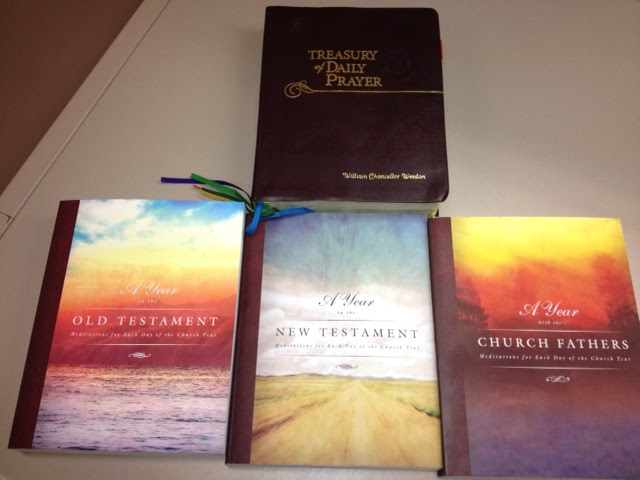
FW: Resources for the Daily Lectionary
Weedon… Feed: Weedon's Blog
|


FW: Are Lutherans Like Catholics? Yes, and No. Read this interview.
Faith and Act… Feed: Cyberbrethren Lutheran Blog Feed
|


Noted Review: Christian Fiction
Litfin, Bryan M. The Gift: A Novel (Chiveis Trilogy, Book 2). Wheaton, IL: Crossway, 2011. 407 Pages. Paper (Advance Proof). http://www.chiveis.com/ http://www.crossway.org/ (N) As one might imagine in the second book of a trilogy, the saga that began in Book 1 continues. Above all else, Professor Litfin spins a great yarn. This reviewer was absorbed by the story from beginning to end. The two main characters from The Sword – Teofil and Anastasia - are back with a fine supporting cast of good and evil characters. Overall, I was less impressed with Book 2 of the Chiveis Trilogy. I suppose it was because for me some of the novelty of the story had worn off just a bit. But still the overall premise is ingenious – writing from the perspective of not having a copy of the New Testament far in the future and trying to figure out the fullness of Christian faith. See: http://lhpqbr.blogspot.com/2011/02/noted-review-christian-fiction.html for Pr. Bertram's review of The Sword. The Gift has a three-part division as did The Sword. Part One is Solidarity; Part Two is Extravagancy; and Part Three is Victory. The story revolves around Teo and Ana's quest for a copy of the New Testament. It is intriguing how they and others working together piece together much of what the Old and New Testaments reveal about the true God – "Deu" in their case. I admire the ability of Professor Litfin to help the reader imagine that, yes, we do not know the fullness of God's revelation of Himself. Parts are missing and all we have is an incomplete picture. Near the beginning, Ana tells Teo, " Someday we'll discover the rest of Deu's story." (page 26). Hence the quest for the New Testament. Teo meets a "scrawny teacher with long white hair [named Sol]" (page 74), who broadens Teo and Ana's knowledge of Deu. Sol is a believer in Deu (Deus), telling Teo, "I do [believe in the Creator]. His name is Deus. He is one true God, and he existed before all time." (page 76) But they do not know who "Iesu Christe" (page 79) is. Sol does tell Teo that he had heard "this name used to describe a savior figure prefigured in the Holy Book." (page 79) They read from the Second Book of Samuhel, the seventh chapter about a Promised king who will rule forever. But they do not know if Iesu Christe is the Promised King. Sol also reads from "the fifty-third chapter of Isaias" (page 79), describing a "'man of sorrows' who ended his life in defeat" (page 79). And they do not know which Iesu Christe is – "the victorious Promised King or the defeated Suffering Servant" (page 79). More hints are given as Teo and Ana are "window shopping" and Ana's eyes land on what we would call a crucifix with a corpus on it. They know the cross is Deu's symbol, but did not know it was a place of death. Throughout the book Teo and Ana's knowledge grows by bits and pieces as they interact with other "Christiani," and as more and more truth of Deu is revealed to them. Again it is fascinating to see the revealed truths of the Christian faith veiled and then unveiled bit by bit. Sol and Teo travel to the Forbidden Zone, the Land of the Defectives, to learn more about the "Pierced One." (page 132) The Defectives are anyone who has a disfigurement of any kind. They are removed from the country of Ulmbartia to the Forbidden Zone by the shamans, also known as the Exterminati. As Teo and Sol meet the Overseer, one receives a hint of the theology of the cross that is scattered throughout the book. He tells Teo, "To perceive the truth, you cannot be whole, . . . [o]nly the broken can truly see." (page 130) He then "breaks" Teo by piercing his hand with a nail. The Overseer also tells Teo, "I believe you may one day understand the nature of weakness . . . Deus favors the weak and the downtrodden. He hides his strength in them." (page 132) By the way, Ana is also a defective because of the scar from the wolf bite she had received. (pages 154-155) The Pope is in The Gift, albeit a kinder, gentler Pope, called "Papa" by the Christiani. He even lives in Roma. He is the leader of the Universal Communion. Teo struggles with having a theology of glory as he believes that the power of the Promised King must return to his followers. (page 293) He thinks that evil is in control because Borja (an evil man whose motto is "cruelty is strength (p. 150)) "controls everything." (page 294) He tells the Papa, "But if we had power, things would be reversed. Instead of being weak, we'd be the triumphant ones." (page 294) Teo sees power and weakness as being "mutually exclusive." (page 295) "If you're weak, you lose. Be strong, and you win."e tellsHe (page 295) Later, by means of a diary, Ana tells Teo of the theology of the cross, "This is exactly how Deu works. He takes the weak and raises them up, and he brings the mighty low. He turns all our values upside-down. " (page 344) Teo, Ana, Sol, the Overseer, the Papa, and many other characters wrestle with exactly how Deu works in the world. Through power or through weakness? Evil. Good. A washing. A sacred meal which "binds us to Iesus." (Page 294) Chastity. God's care and providence. His working through means. Revelation. The quest for the New Testament. Missions. These and many more theological concepts are found throughout The Gift. The story itself is worth reading. Especially if one has read The Sword. One just has to find out what happens to Teo and Ana! Will they move closer to their goal of bringing the New Testament to their homeland of Chiveis? A QBR reviewer strives to answer this question: should a Lutheran pastor or layperson purchase this book or borrow it from the library and read it? As I wrote in my review of The Sword: "Like all fiction books, this one transports the reader to a different world. Dr. Litfin does an excellent job bringing us from the 21st century to the Kingdom of Chiveis four centuries into the future. The book is a vehicle to think about how the Bible and the Church survive in the future against demonic forces. The book's story line is very creative. As a Lutheran pastor or layperson reads it with Lutheran eyes, he or she can receive much diversion and enjoyment from reading [The Gift.] Should you purchase it with your hard-earned money? Obviously that is a personal question which only you can answer. But unless Pastor Cain gives me the next volume of the trilogy to read (and review!), I am looking forward to adding it to my library." The Rev. Peter Bertram is Pastor of Our Savior's Lutheran Church in Chadron, Nebraska and is a regular contributing reviewer to QBR. |


Resoures Received for Review
|

