Tuesday, May 15, 2012

FW: The high holy day of Mother’s Day


Consider…


Feed: GetReligion
Posted on: Sunday, May 13, 2012 11:58 AM
Author: Mollie
Subject: The high holy day of Mother's Day


One of the things that unites readers and reporters is that we are writing or reading news because we're curious about the world around us. USA Today runs a story about something quite common — the celebration of Mother's Day — and yet I found it interesting because it satiates some of that curiosity I have about Mother's Day.

I don't really celebrate Mother's Day. I keep in contact with and show appreciation for my mother throughout the year. And my own children and husband could not be more appreciative of me, so the day just doesn't do much for me. It's also not a part of the Lutheran liturgical calendar and so we're more likely to talk motherhood on those days associated with Mary, Jesus' mother, than we are on Mother's Day. We are likely to get a mention of the day in the prayers, it's just not going to derail the appointed readings for the day.

This story in USA Today is about people who and congregations that celebrate Mother's Day. Written by Godbeat pro Cathy Lynn Grossman, here's the lede:

Hold the chocolate and flowers. Hold the brunch reservations. What mom may really want for Mother's Day is for the whole gang to go to church first.

A new survey of 1,000 Protestant pastors finds Mother's Day ranks right after Easter and Christmas in peak church attendance.

Father's Day, however, is near the bottom of the poll although both holidays were founded as church events more than a century ago.

There may be something to this. Not two minutes before I read this article, a friend of mine reported on Facebook, "Sometimes my six year-old wild child is sweet and so very insightful. I just overheard him whisper to his brother, 'I have the perfect Mothers Day gift for mom. Let's be on time for Mass tomorrow!'" In the article, we get more specifics about how high of a holy day Mother's Day is for many American Protestants, with fully 59 percent ranking it as one of the top-three days for attendance throughout the year.

Grossman compares how Mother's Day and Father's Day are celebrated and some of the reasons why Mother's Day may win out:

Family dynamics make a difference, too. Dads may be church-averse, but moms have clout on certain days.

"Christmas, Easter and Mother's Day have become the three days of male holy obligation when their wives and mothers are able to guilt them into the pews," says David Murrow, author of Why Men Hate Going to Church.

This peaks like a candy kiss on Mother's Day when "pastors tend to gush over women in their sermons," Murrow says.

"But on Father's day, men get a 'straighten up' lecture: 'Dad, get right with God, reconcile with your kids,' etc. You would never hear any suggestion on Mother's Day that women could improve on their relationships," Murrow says.

I love these quotes but this in no way matches anything like you might hear at any Lutheran church I've attended. Another pastor backs up Murrow's claim.

We learn that smaller churches with attendance of fewer than 40 people are particularly fond of Mother's Day. We get some nice color, including this bit about Nashville's First Wesleyan:

Pastor David Gould, 42, says it's an inner-city congregation, "where the mothers and grandmothers are the fixture of the community. Our numbers jump up with folks who will come with their moms to honor them this Sunday, even if they go to a different, bigger church other Sundays.

"Most people say their spiritual life and foundation comes from their mother," Gould says.

Pastor Geoffrey Mitchell, 36, is counting on those motivations. He's picked this Mother's Day for the debut worship service for a new Disciples of Christ congregation, Big Life Community Church in Oswego, Ill.

His reasons are both pragmatic and spiritual.

It's the ideal day for attracting the husbands and the 20-something kids of moms in their 50s, the two demographics with the lowest church attendance, Mitchell says.

Fascinating! Mitchell goes on to say his sermon theme will begin with his own mother and her Christian faith. Again, I don't want to sound like that New York Times anthropologist, but this is all very different from the way sermons are done in my tradition.

The article says that Mitchell's approach "echoes the original honoree of the first official Mother's Day: Anna Reeves Jarvis, who devoted herself to improving the health of women and families in the 1850s."

She overcame many obstacles in her zeal to do good works, including the Civil War itself. We get a nice history of Mother's Day and how it was first marked on May 10, 1908 at a Methodist church. It became a political cause and exploded nationwide. Jarvis' daughter had hoped it would be a day for prayer and personal time with mothers, not a commercial holiday. She fought that commercialization for years. There are some interesting stories about her efforts and how they failed.

In 1909, a woman launched Father's Day in honor of her devoted dad, and by 1924 it became a nationwide cause as well.

The article includes a sidebar with information about how much more Americans spend on their mothers than on their fathers. And on what they buy. I was surprised to find out that, according to the cited research, only half celebrate the holiday with gifts for their mothers. I would have suspected it to be much higher.

Anyway, the article is full of information of interest to the USA Today audience. And this isn't a criticism so much as just a random thought, but for many of my friends and acquaintances Mother's Day is a day of sadness. Whether it's because they had bad mothers or they themselves weren't great mothers, because they're infertile or lost a child to miscarriage, because they've never had the opportunity to get married and have children, or because their own children aren't as appreciative as they wish, this day can be rough for many women.

One of the things I have seen done at Lutheran congregations, and I'm sure this is done elsewhere as well, is handing out flowers to the mothers or to the women of the congregation. It can be difficult for those women who are suffering with infertility or other pains associated with motherhood. I would love to know if congregations are sensitive to this problem and what they do to mitigate that pain for the women in their congregation.

In other treatment of Mother's Day, I thought this "Got News" type piece that ran in the Los Angeles Times about forced sterilization and eugenics programs was brutal and beautifully done.

At the other end of the spectrum was this Washington Post "news" item about the "cult" of motherhood in Mexico. I'm not sure if the smarmy piece is more offensive to Mexicans or Americans but it was just surprisingly negative and shallow for a piece on motherhood. But very heavy on stereotypes, if you're into that.

Let us know if you see any good stories that incorporate religion and motherhood.

(Mary and Jesus statue photo via Shutterstock)


View article...


View article...

FW: Ihr Christen, nun schwinget empor


Cantemus…


Feed: HYMNOGLYPT
Posted on: Sunday, May 13, 2012 9:54 PM
Author: Matt Carver (Matthaeus Glyptes)
Subject: Ihr Christen, nun schwinget empor


Here is my translation of an old Ascension hymn (or song, lit., "Himmelfahrt-Liedlin") for by Lutheran pastor Bonifacius Stölzlin (1603–1677). Not much distinguishes it from other Ascension lyrics other than the interesting rhythm and pattern. The text comes from Fischer, et al., Das deutsche evang. Kirchenlied des 17. Jahrh.s, vol. 3 (p. 270). I have yet to find a suitable tune for it. If you know of one, please post a link or description of the source.

O CHRISTIANS! your voice lift on high
To heav'n, where the choirs gladly cry,
Your strains with the angels be blending,
For Christ is gone up with great cheer,
And a shout, into heaven ascending
So sing and rejoice, far and near,
O Christians, your voice lift on high
To heav'n where the choirs gladly cry.

2. This day is Christ lifted on high,
Where angels in choir make reply,
For He hath His foes all defeated,
And led them all captive away,
In triumph the Victor is greeted,
And gives us His gifts on this day
So, Christians, your voice lift on high,
To heav'n where the choirs gladly cry.

3. Your hearts and your minds lift on high,
Where Christ, far beyond clouded sky,
Builds mansions that ye shall inherit,
And at the right hand, He, the Lord,
Now leads us and guides by His Spirit,
Defending us all by His Word:
Therefore, where the choirs gladly cry,
He will lift you also on high.

Translation © Matthew Carver, 2012.

GERMAN

1. Ihr Christen, nun schwinget empor
Die Stimmen mit frölichem Chor,
frolocket mit Englischen Scharen,
Weil Christus mit frölichem Schall,
mit Jauchzen gen Himmel gefahren.
Drum singet und freuet euch all
und schwinget die Stimmen empor,
Ihr Christen, mit frölichem Chor.

2. Heut Christus sich schwinget empor,
entgegen dem Englischen Schor,
dieweil er die Feinde geschlagen,
gefangen sie alle geführt
und offentlich schaue getragen
uns aber mit Gaben geziert.
Drum schwinget die Stimmen empor,
Ihr Christen, mit frölichem Chor.

3. Schwingt eure Gedanken empor,
durchdringet durchs himmlische Tor,
da Christus die Wohnung bereitet,
zur rechten des Höchsten sitzt,
mit seinem Geist führet und leitet,
bei seinem Wort mächtig uns schützt:
so wird er zum himmlischen Chor
euch endlich auch schwingen empor.


View article...


View article...

FW: Luke's Theology of Worship -- according to Kleinig!


More Kleinig…


Feed: Pastoral Meanderings
Posted on: Sunday, May 13, 2012 5:00 AM
Author: noreply@blogger.com (Pastor Peters)
Subject: Luke's Theology of Worship -- according to Kleinig!


Commenting upon the post-Easter appearances of the Risen Lord in Luke's Gospel, John Kleinig suggests that it is not a mere accident that Luke records that seeing Jesus they did not see (recognize Him) and then not seeing Jesus they saw (recognized Him).  He describes this as part of Luke's theology of worship.  Luke points us to the mystery of the crucified and risen Lord who is revealed no longer with the eyes but where He reveals Himself -- in the means of grace!  Jesus preaches Himself to us from the Scriptures and through the Scriptures and He makes Himself known to us in the breaking of the bread (the Eucharist). The heart of the mystery is seeing Jesus where He intends to be seen.  Obviously faith is required and those without faith see neither Jesus nor the means of grace. Surely this mystery is not incidental to Luke or to the early Church but essential.  Christ will only be known where Christ reveals Himself and Christ reveals Himself  where He has placed His promise and where He sends forth His Spirit (the Word and Sacraments). 

Worship is not where we speak about the mystery but where the mystery is enacted.  Kleinig suggests that in the classroom you can talk about preaching but it is a bit like talking about food without actually eating.  It is in the worship life of the baptized community that the Word is enacted, that is, where Jesus preaches Himself to us.  In the same way, in a systematics class or even a worship class, you may talk about the Lord's Supper but it is in the worship life of the baptized community that the Meal is enacted, that is, where Jesus conveys Himself to us in bread that is His body and the wine that is His blood.  Thus, Kleinig says, in the classroom we stay here on earth but in worship we enter the heavenly domain.  In contrast to those churches the speak of the absent God who must be pointed to in heaven (though the Spirit is here), Lutherans speak of the God who is fully present with His Church through the means of grace, the vehicles of His promise through God works and acts here and now.

It is exciting to hear him speak in this immediate way because we have fallen victim to the real absence understanding of the Lord.  Ask anyone in church on Sunday morning where God is and the hand instinctively points to the sky when it should be pointing to the Word and the Sacraments.  This is not worship in theory but the practice of the presence of God (to borrow Brother Lawrence's catchy title).  We encounter the living Lord exactly where He has promised to be and we meet Him there as the active God who delivers what He has promised to the people of His promise.

You may want to listen for yourself....  It is about an hour but worth every minute.  What is most amazing is that these words are not some academic lecture but the practical words through which Kleinig, as Dean of Chapel, introduces worship as the center of the seminary life together and worship as a fundamental part of the formation of a Pastor.  These words are too good to left to the particular setting in which Kleinig first spoke them and they deserve wider exposure throughout our Lutheran communion.


View article...


View article...

FW: Great Stuff — How Obama became Pro-Gay Marriage


Hoppe…


Feed: Steadfast Lutherans
Posted on: Saturday, May 12, 2012 2:14 PM
Author: Norm Fisher
Subject: Great Stuff — How Obama became Pro-Gay Marriage


Another Great Stuff post on Pastor Philip Hoppe's blog, Meditations of the Heart:


Listen to his own words:

"I have to tell you that over the course of several years as I have talked to friends and family and neighbors, when I think about members of my own staff who are in incredibly committed monogamous relationships, same-sex relationships, who are raising kids together; when I think about those soldiers or airmen or marines or sailors who are out there fighting on my behalf and yet feel constrained, even now that 'don't ask, don't tell' is gone, because they are not able to commit themselves in a marriage, at a certain point I've just concluded that for me personally it is important for me to go ahead and affirm that I think same sex couples should be able to get married," Obama told Roberts in an interview to appear on ABC's "Good Morning America" Thursday.

Obama become Pro-Gay marriage relationally. He knew people who were gay and wanted no longer to offend those people by denying them the rights other couples have.

He did not come to this position through biological reflection. No one discovered a hereunto unknown gene which shows that people are born genetically gay. Every male and female born today are still born with private parts that suggest the only biologically compatible relationship is that between man and woman. It remains the only relationship which can propagate the species. Nothing has changed there.

He did not come to this position after re-examining the Scriptures Christianity holds as sacred. For again, those scriptures still testify from the first book to the last that marriage and sexuality are given only to men and women. Those wish to argue otherwise are required to come to the scriptures with a Jeffersonian love for excising troublesome parts of the Book at their own discretion.

He did not come to this position historically or sociologically. The research all shows that homosexuality is not a practice that prospers societies.

Obama become Pro-Gay marriage relationally. And he is not alone. I would suggest that everyone who does not come to this position by virtue of personally embracing homosexuality as their own sexual identity comes to this position relationally. They know someone who claims homosexuality as their identity and cannot bear to stand in opposition to them.

And I do not wish to minimize this struggle for a moment. It is a dark and torturous place for anyone to be. I have experienced it personally though not as closely as many of you may have. But the fact that it is hard to stand in opposition to those we love does not make it okay to not do so.

Matthew 10:37-39 Whoever loves father or mother more than me is not worthy of me, and whoever loves son or daughter more than me is not worthy of me. And whoever does not take his cross and follow me is not worthy of me. Whoever finds his life will lose it, and whoever loses his life for my sake will find it.

If you have not felt the heat of this crucible yet, you surely will. You will know someone and love someone who will choose homosexuality as their way of life. You will desire to keep both them and your beliefs close.

When it happens, do not melt away. Do the truly loving thing, stand firm, and speak the truth in love. Keep a close watch on yourself and on the teaching. Persist in this, for by so doing you may save both yourself and them.

And yet be prepared for the opposite also. For if that person does not turn after much loving counsel, the intensity of the heat will grow. Eventually it may dissolve the connection between you and them. And while that is never the intention, it is far more important that you remain connected to Christ. You must remain relationally connected to Christ. It is your life.


View article...


View article...

FW: Intonations vs. Preludes: Introducing Hymns


Magness…


Feed: Fine Tuning
Posted on: Saturday, May 12, 2012 11:04 AM
Author: Phillip Magness
Subject: Intonations vs. Preludes: Introducing Hymns


This post is not just for the organist - but for the pastors and worship committees who work together with them in planning the Divine Service.   As you may have noticed, we're moving toward more bite-sized "helpful hints" posts here at Fine Tuning.  We hope the ideas we are sharing will be "solutions" for you in your parish.

The title gets right to the issue: Do we want to introduce a hymn with a hymn prelude or intone the hymn with a simple introduction?  This question often comes up with worship planners, especially when length of service is discussed.  Too often the service suffers because the decision is made to go either one way or the other.   In other words, some organists are told to play simple, short intonations for all hymns so that worship length can be cut down or organists are given free reign and then many of us musicians decide that every hymn needs 3-4 minutes of our music to set it up - potentially adding about 10 minutes to a service.

While each liturgy needs to be considered in its own context, there are some simple guidelines we'd like to offer that will help you incorporate meaningful organ repertoire into the hymnody of the service while avoiding adding tedious delays to the liturgy:

1 -  If the people are standing, it is usually best to play an intonation.  If the congregation is getting ready for a procession after announcements or Confession/Absolution, a short prelude or longer intonation can work very well, as the people will need more time to get their hymnal & bulletin prepared and are in a preparatory mood themselves, but the general rule prevails.   Folks don't want to stand for 3 minutes before they get a chance to sing.

2 -  If the people are participating in a communal or ritual action, such as receiving the Lord's Supper, then an organ prelude doesn't add time to the service.   However, care must be taken not to play repertoire too far afield from the tempo and tone of the tune being introduced, lest the assembly not understand that the next hymn is being introduced.   More varied repertoire can be used in place of a hymn stanza if so noted in the bulletin.  This maintains clarity and also can add special meaning, as a "hymn prelude" is employed to "paint the text" of a particular stanza by matching the composition with the most appropriate words.  This practice also aids worshippers in finding their place in the hymn upon returning from the Lord's Supper.   (i.e.  if the organ is playing "stanza 4", then one knows stanza 5 is next.  This can be particularly helpful to people coming back to their pews in parishes where the singing during communion is not strong enough for one to readily ascertain which stanza is being sung.)

3 - The Hymn of the Day is the chief hymn of each Divine Service and thus deserves the highest level of musical attention.   This hymn amplifies the readings for the day and is directly connected to the sermon.  The people are seated for this hymn - a position for meditation - and so are prepared for listening.   Along with the practice of assigning stanzas to choirs or soloists, using instrumentalists or handbells to accent or adorn various stanzas, the organ has its best opportunity here to help the assembly interpret the text.   While certainly a four-minute prelude is not called for each week, this is the best time for the organ to make use of the art of music in service of the Gospel.   Preservice music is heard by some, but people are gathering and often talking.   Voluntaries are appreciated by more, but the plate is being passed and folks are often distracted by their kids during this "break in the action" between the Service of the Word and the Liturgy of the Lord's Supper.   And though we love our toccatas, only a handful stick around to hear the postlude.   So the Hymn of the Day remains as the organist's best opportunity to inspire and encourage the congregation.  

Finally, keep in mind the purpose of the introduction.  The hymn introduction - whether a prelude or intonation - should clearly announce the tune, establish the key, set the tempo, and be in the character of the text to be sung. There are many compositions of wonderful hymn-based music than can and should be played in the service but are not the best choices for hymn introductions.   They can better be used as preservice music, text-painting stanzas for solo organ, voluntaries (music during the receiving of tithes and offerings), or postludes.   What is played before the congregation sings, however, should above all else always prepare them to sing.

And the more your congregation sings the hymns, the more they will appreciate the organ playing based upon these hymns throughout the service!  ;)


View article...


View article...

FW: The Evangelical Lutheran Church — Understanding Purpose


Poppe…


Feed: Steadfast Lutherans
Posted on: Saturday, May 12, 2012 9:06 AM
Author: Pastor Clint Poppe
Subject: The Evangelical Lutheran Church — Understanding Purpose


The word "purpose" has become quite a money-making industry. Ever since Rick Warren's blockbuster book The Purpose Driven Life: What On Earth Am I Here For? hit the shelves in the fall of 2002, the landscape of American Christianity has been driven by purpose.  Videos, music, workbooks, study guides, evangelism programs and more all promise to help you find your purpose. Not only can your life be purpose driven, but also your church, youth group, community, recovery, small group, and even chiropractic care (Eagle, Idaho-check it out!). This new fad is not really new; just a modern twist on an age old question, "Why am I here?"

The question is very real, and answers vary greatly. People genuinely want to know their purpose in life and until the question is satisfactorily answered there is nothing but doubt and worry and quilt and uncertainty. Lutherans have a distinct and unique way to answer questions about purpose, but the answer doesn't inspire million dollar marketing campaigns and at times leaves people wanting more. It is, however, Scriptural and Christ centered and "cross-driven."

A few years ago a young women asked to meet with me.  She said she was having a "spiritual crisis" and wanted to talk to a Lutheran pastor.  Having grown up Lutheran, she had spent the last 10 years or so in various Evangelical churches. She had a serious decision to make that involved work and location and family and a boy friend, in short, "should she stay or should she go." She told me she had visited with several pastors and still had no answer.  She laid out her situation in great detail and asked me what God wanted her to do, which choice would God bless. In obvious distress, this young woman was at a crossroad in her life and had a difficult decision to make. She wanted me, or rather God through me, to tell her what to do.

I shared with her Psalm 55:22 and reminded her that she was righteous, not because of her works or decisions or choices, but because the Righteous One, Jesus Christ, lived and died and rose for her. He delivered the deliverance to her in the waters of Holy Baptism and put His name on her there. Then I went to Galatians 2:20. Crucified with Christ in her baptism she now lives her life by faith in Christ. I asked her if either choice was sinful or harmful in any way.  She said no. I then smiled and said she was free, free to choose knowing that God would be with her and bless her no matter what she decided. I was not prepared for her response.

"Is that really what Lutherans believe, that I am free?"  I nodded and took her to several other passages in Galatians and John and assured her that in her situation she truly was free.  "But I don't want to be free; I want God to tell me what to do. I want my decision to glorify God!" It was then that I realized I was speaking a foreign language to her. Ten years of Reformed and Evangelical theology had made its mark. I remembered the answer to the first question in the Westminster Catechism; the purpose of man is to glorify God, which is not all that different from the way Thomas Aquinas answered the purpose question in his Summa Thelogica (first part of Part Two) where glorifying God results in true happiness.

I have always been amazed by the number of Lutheran churches that have embraced the "Purpose Driven" methodology. It's hard work to be consistently Lutheran in doctrine and practice in light of the newest fads and gimmicks.  The fads and gimmicks seem to work, at least when the measuring marks are dollars and seats.  A brother LCMS pastor once asked me, in light of our discussion on being "purpose" driven, "So how would you answer someone who wants to know the purpose of man?"  "The purpose of man" I said, "is to receive the gifts of God."  The look on his face was exactly the same as the young woman in my office.


View article...


View article...

FW: Steadfast in Worship — It’s Hard to Follow This Hymn with a Worthy Sermon


On Hymnody and Preaching…


Feed: Steadfast Lutherans
Posted on: Friday, May 11, 2012 9:16 AM
Author: Pastor Josh Osbun
Subject: Steadfast in Worship — It's Hard to Follow This Hymn with a Worthy Sermon


I remember some years ago a friend of mine posted as a Facebook status something along the lines of, "I am using so-and-so's hymn for the hymn of the day.  Why do I have to preach afterward?  It already says everything I want to say."  Obviously, that thought has stuck with me.

But then that thought came back to me on the Fifth Sunday of Easter (Three-Year Lectionary, Series B, John 15:1-8).  I selected TLH 206, "Jesus Christ, My Sure Defense," as the hymn of the day.  And in both services I struggled mightily with the decision to cast aside my prepared sermon and preach instead on this hymn text.  In neither case did I actually do it, and now part of me regrets that.

This is a great Easter hymn, especially when you can sing all ten stanzas.

1. Jesus Christ, my sure Defense
And my Savior, ever liveth;
Knowing this, my confidence
Rests upon the hope it giveth
Though the night of death be fraught
Still with many an anxious thought.

2. Jesus, my Redeemer, lives;
I, too, unto life shall waken.
Endless joy my Savior gives;
Shall my courage, then, be shaken?
Shall I fear, or could the Head
Rise and leave His members dead?

3. Nay, too closely am I bound
Unto Him by hope forever;
Faith's strong hand the Rock hath found,
Grasped it, and will leave it never;
Even death now cannot part
From its Lord the trusting heart.

4. I am flesh and must return
Unto dust, whence I am taken;
But by faith I now discern
That from death I shall awaken
With my Savior to abide
In His glory, at His side.

5. Glorified, I shall anew
With this flesh then be enshrouded;
In this body I shall view
God, my Lord, with eyes unclouded;
In this flesh I then shall see  
Jesus Christ eternally. 

6. Then these eyes my Lord shall know,      
My Redeemer and my Brother;  
In His love my soul shall glow,–
I myself, and not another!
Then the weakness I feel here
Shall forever disappear.

7. They who sorrow here and moan  
There in gladness shall be reigning;
Earthly here the seed is sown,  
There immortal life attaining. 
Here our sinful bodies die,    
Glorified to dwell on high.

8. Then take comfort and rejoice,
For His members Christ will cherish.
Fear not, they will hear His voice;
Dying, they shall never perish;
For the very grave is stirred
When the trumpet's blast is heard.

9. Laugh to scorn the gloomy grave
And at death no longer tremble;
He, the Lord, who came to save
Will at last His own assemble.
They will go their Lord to meet,
Treading death beneath their feet.

10. Oh, then, draw away your hearts
Now from pleasures base and hollow.
There to share what He imparts,
Here His footsteps ye must follow.
Fix your hearts beyond the skies,
Whether ye yourselves would rise.


There are two themes in hymnody that really drive my passion: one is any reference to Christ as our Priest; and the other, which is very strongly portrayed in this hymn, is that of the Christian conquering death.  Our goal is not merely to "go to heaven."  Our goal is to overcome death in the resurrection of the dead.

Indeed, we will be in heaven and I certainly don't wish to deny that.  But the concept of heaven has become so watered down in pop culture and pop theology.  Many Christians view heaven as nothing more than this ethereal existence where we float around as disembodied spirits, strumming golden harps, sitting on clouds.

Nay, for the Christian our goal is the resurrection of all flesh, the reunion of body and soul unto eternal life in the perfectly restored creation.  Notice at the end of the creeds we don't say, "And I believe in eternal life in heaven."  We say, "I look for the resurrection of the dead and the life of the world to come.  Amen!"  At our funerals we stand next to open graves and say, "Where, O Death, is thy victory?  Where, O Death, is thy sting?"  And to the world we look like fools.

But in the resurrection of Jesus Christ we can "laugh to scorn the gloomy grave."  In the resurrection of the dead "then these eyes my Lord shall know, My Redeemer and my Brother."  Because Jesus lives we do not fear death.  We do not hide from death.  We do not sweep death under the rug and pretend that it doesn't exist.  We face death with all boldness and confidence because Death is dead and Jesus is alive.

"Shall my courage, then, be shaken?  Shall I fear, or could the Head rise and leave His members dead?"  Absolutely not.  Jesus lives.  So will we.  Death has done its worst and Death has lost.

I was not astonished that many people disagreed with me about the content of Walther's Easter hymn.  But what did astonish me was the number of people who claimed that his hymn was their favorite, especially when there are far superior texts such as this one out there.  I'm not sure that I could narrow myself down to one solitary favorite Easter hymn.  My disagreement with Walther aside, that one still wouldn't make my top ten.  This one, however, would probably be in the top three (along with the Easter Sequence and "Christ Jesus Lay in Death's Strong Bands").

This hymn really does almost have it all.  It proclaims Christ's victory over death, our salvation through grace by faith, the powerlessness of death, the hope of eternal life, and the comfort for all who mourn that is found only in He who rose again from the dead.  And that's what Easter is all about.  I'd be even more excited if a stanza pertaining to Holy Baptism and Holy Communion could be worked in there; but I am more than content with how the hymn stands.


View article...


View article...

FW: Homosexuality, God, and The Bible


Clarity…


Feed: Intrepid Lutherans
Posted on: Friday, May 11, 2012 11:34 AM
Author: noreply@blogger.com (Pastor Spencer)
Subject: Homosexuality, God, and The Bible


The Whole Truth!

There has been much discussion and debate about homosexuality, not just in the secular world, but also within various Christian denominations. In all this, the most important consideration must be what God says on the issue. Therefore, the question for all Christians must be: What Does God say about homosexuality in the Bible?


Human Questions – Divine Answers

Question: Isn't the Bible silent about homosexuality, or isn't it true that what is written does not show it to be against God's will, and not really sinful?


Answer: Actually, the Bible is very clear on the subject of homosexuality in such passages as Leviticus 18:22, Romans 1:26 & 27, First Corinthians 6:9, and First Timothy 1:10, where homosexuality is called sin.

Question: But do these passages really talk about what we know as homosexuality?


Answer: In the Leviticus passage God forbids a man to "lie with a man as one lies with a woman; that is detestable." The word for "lie" is the Hebrew word for bed, and is also used for marriage, and the act of consummating a marriage; therefore, there can be no doubt as to what Moses is referring; for a man to have intercourse with a man as he would with a woman is disgusting to God! Indeed, there are numerous Old Testament passages, that all condemn homosexuality: Genesis 19:1-29; Leviticus 20:13; Deuteronomy 23:17; Judges 19; and First Kings 14:24, 15:12, and 22:46.


Question: But the Old Testament laws are no longer binding on New Testament Christians, right?


Answer: True enough for the most part, but then we have the passages in St. Paul's letters, given by the inspiration of the Holy Spirit. These are certainly authoritative to any who would claim to be Christians!

- In Romans 1: 26 and 27, Paul speaks of "shameful lusts," and describes this as happening when "women exchanged natural relations for un-natural ones," and also "men committed indecent acts with other men." The term "unnatural" literally means "against the natural order of things." As for what that natural order is, all we need to do is look back to Creation. In Genesis 2:24 we see that the natural order is that of husband and wife (i.e., male and female) becoming "one flesh." Therefore, according to the One who created humans, any sexual intercourse aside from male and female is un-natural - not the natural or intended use of the Creator - in other words, wrong! Please forgive the bluntness here, but it is necessary so as to leave no doubt as to what the Bible is talking about. The term "indecent acts" means any "deed of shame having to do with one's genitalia." Since Paul says these acts are being done between men and men and between women and women, the meaning is clear to anyone who is willing to see it: the use of one's genitals with those of the same sex is shameful to God.
- In First Corinthians 6:9 God condemns "homosexual offenders" and "male prostitutes." The first term comes from the Greek word for "soft, weak, sick," and was often used for "effeminate" men, and especially for catamites; i.e. men and boys who allowed themselves to be sexually used or even abused for money or goods. The second word was very commonly used for a sodomite, someone engaging in homosexual anal intercourse; or pederast, someone using young children, usually boys, for sexual purposes. The same word is used in First Timothy 1:10; only there, the NIV translates it as "pervert." The term is a compound word from two Greek words meaning "male," and "marriage act, bed, or intercourse." Again, sorry for the explicit language, but the meaning could not be more understandable and to-the-point; male to male, or female to female sexual activity is sinful, period.

Question: But isn't it really just homosexual "activity" that's condemned in the Bible, not homosexual "orientation?" Isn't it possible that a person can be a "non-practicing homosexual," like being a non-practicing Catholic or Jew?


Answer: The main definition of homosexuality is "sexual desire for those of the same sex" (Webster's New World Dictionary). Jesus teaches us clearly that sin begins in the "heart," or mind (Matthew 5:27,28). Thus, the very attraction itself to members of one's own gender is just as sinful as attraction to someone other than your own spouse, whether any overt action takes place or not. Thus, the Bible is clear that so-called "homosexual orientation" is sinful also.


Question: Isn't it possible that certain people are born as homosexuals; and therefore God cannot condemn them because He created them that way?


Answer: We have already seen that God does indeed proclaim homosexual thoughts and actions as contrary to His will, and therefore wrong, morally sinful, and thus certainly imperfect. Yet, when we look back at creation, Genesis 1:31 tells us, "God saw all that He had made, and it was very good." The Hebrew word here means "good in every way; totally perfect." Thus, it is completely impossible for God to create homosexuals. The fact is, God does not create or make homosexuals anymore than He creates or makes any other kind of sinner!


Question: If that's the case, then what is the origin of homosexuality?


Answer: In Mark 7:21-23 Christ says, "For from within, out of men's hearts, come evil thoughts, sexual immorality, theft, murder, adultery, greed, malice, deceit, lewdness, envy, slander, arrogance and folly. All these evils come from inside and make a man unclean." And St. James reminds us, "When tempted, no one should say, 'God is tempting me.' For God cannot be tempted by evil, not does he tempt anyone; but each one is tempted when, by his own evil desire, he is dragged away and enticed. Then, after desire has conceived, it gives birth to sin; and sin, when it is full-grown, gives birth to death." (1:13-15)


Question: Does this mean that all homosexuals are lost and condemned to hell for all eternity, with no hope of salvation?


Answer: Absolutely not!

- Yes, the Bible does speak out strongly against both homosexual desire and activity. Indeed, the Holy Scriptures are crystal clear – one could even say quite open and blunt – on the subject. Simply put, homosexual thoughts or acts are definitely against God's will and therefore sinful, pure and simple.
- However, they are no different from any other sin. They have been completely paid for by the sacrifice of Jesus Christ on the Cross and can be forgiven. Homosexuality is not the one and only "unforgivable sin," and homosexuals should not be shunned or looked upon as hopelessly condemned to hell.

Question: How can homosexuals be saved?


Answer: Just like every other sinner – faith in Jesus Christ as Savior!

- However, so that a person may receive the eternal benefits of this free forgiveness, the truthfulness of God's condemnation of homosexuality needs to be acknowledged. People cannot claim to believe in Jesus, but then also say He was and is a liar on a particular subject!
- And unfortunately, homosexuals are not going to admit they are wrong, confess their sin, and repent of their soul-destroying life-style if they are told that what they are doing or thinking its fine with God and not a sin, and thus "natural," and "normal."
- It is, therefore, a great tragedy that the leaders of most church bodies today deny the clear teaching of the Bible and allow for – or even promote – homosexuality as normal and natural and not sinful.
- Such people are actually leading homosexuals away from forgiveness and salvation, and thus shall themselves receive a terrible judgment from God. Jesus said in Matthew 18:6 and 7, "If anyone causes one of these little ones who believe in Me to sin, it would be better for him to have a large millstone hung around his neck and to be drowned in the depths of the sea. Woe to the world because of the things that cause people to sin! Such things must come, but woe to the man through whom they come!"

Summary: Our Savior wants everyone to repent, believe in Him, and be saved. That includes people caught in the sin of homosexuality. It is the church's duty to proclaim this truth. May God help us to always do so clearly, for the salvation of many!


Pastor Spencer

 
On Tuesday, look for -

God, Marriage, and the State in Our World Today


+++++++++++++++++++++++++++++++

Dear Reader, while many have declared resonance with us, many more are still considering it. We invite you to Stand With Us.


View article...


View article...

FW: Kleinig on Sasse on Preaching the Gospel


And not just "about" the Gospel…


Feed: Mercy Journeys with Pastor Harrison
Posted on: Friday, May 11, 2012 4:46 PM
Author: Rev. Matt Harrison
Subject: Kleinig on Sasse on Preaching the Gospel


At a conference for pastors in Australia a paper was given on preaching. The discussion which followed focused on whether it was always necessary to preach both law and gospel in every sermon. A seminary professor declared, rather vehemently, that he always preached about the gospel in every sermon. At this Sasse got up, shuffled to the microphone and stunned the audience by saying:


'Never in all my life have I preached about the gospel in any sermon. And I will never preach about the gospel as long as I live. I have always and will always proclaim the gospel'.


That for me sums up Sasse's understanding of the gospel. The gospel was, for him, always an enactment, a performative utterance. And so, even though he often taught as he preached, he always spoke in such a way that Christ spoke through him to grant forgiveness and all his gifts to the faithful.


John Kleinig, "Sasse on Worship"


View article...


View article...

FW: Sound amplification has changed what we preach, speak and sing...


Consider…


Feed: Pastoral Meanderings
Posted on: Thursday, May 10, 2012 5:00 AM
Author: noreply@blogger.com (Pastor Peters)
Subject: Sound amplification has changed what we preach, speak and sing...


As I read these words, I found myself thinking that this is something which I have always thought but never formed into one thought and voiced it.


...I tried a couple years ago to float the idea that microphones have had an overall bad effect on preaching... How powerfully the modern use of microphones has affected preaching and to some extent singing. Consider, that to preach without a microphone means to preach with elevated volume and it requires one to strongly project the voice. In effect one has to preach authoritatively and passionately. Without a microphone I have to speak boldly. And as I preach in this manner, the physical requirement affects the message... Too much microphone causes the priest to adopt a gentle, lyrical style of preaching. His style too easily becomes suggestive, rather than using bold proclamation...  good gutsy singing has taken something of a hit and I blame the loud microphones for some of it...  Read more here...

I wonder if our tether to microphones and amplified sound has not transformed the content as well as the manner in which preaching takes place today.  There are ample examples of those preaching is less proclamation than conversation.  Such a conversation would not be possible were it not for the sound amplification system that turns up the volume without the preacher projecting more.  The character of the sermon has subtly shifted from proclamation in the assembly to a quiet conversation from the Pastor's study that is amplified so others might listen in.  Some preachers roam around as if their movements add weight to their words.  Others have even focused the entire sermon on but one or several individuals in the assembly, thus increasing the idea that the sermon is a conversation for a few that has been amplified so others might also hear.

I know that my preaching changes from the smaller services in which a dozen or so are present to the larger services in which I am speaking to several hundred.  It is not simply that it is hard to shout at a small group.  It is that the volume of sound needed to reach that small circle of folks is vastly different than the volume of sound needed to reach several hundred people spread throughout the assembly space. 

If you have lectors reading, amplification also affects how they read.  If they know that their is a PA system to increase their volume, the readers often read more softly and gently than they would read if their words were not amplified.  In addition to this, with the ever present printed lessons, the people in the pew do not listen to the sound of the voice as much as they read along.  Reading along with the words printed out is a far different experience than listening to the sound of the voice alone.

No where is this more true than in the realm of singing and the music of the service.  One of the real problems of contemporary worship is that the music depends far too much on mics, mixers, and amps.  The sound is not immediate to the ear but funneled through an amplified to a speaker which directs sound from the different place than the speaker or singer.  Amplified music lends itself more to music as performance music instead of service music and transforms the singer or player into the soloist who sings to inspire or entertain instead of to call the voices of the assembly to join in the song (as was the original role of cantor or liturgical choir).

We do have a PA system and mics but the system is less amplification than enhancement of the sound.  The acoustical pattern of the building means that the spoken word emanates better from the area of the chancel and, specifically, from the vantage point of the lectern and pulpit and altar.  This means that we do not need to substitute the amplified sound for what is coming from the individuals speaking but to enhance that sound for those corners of the building that need them.  The other obvious reason for the PA system is so that we may record the service for distribution.

We have created the need for microphones because we plaster the surfaces in the sanctuary with sound absorbing materials.  Carpet, padded pews, draperies, etc., are enemies of good vocal projection and good singing.  In addition, we have experimented with the outline of the building structure in ways that prevent the sound of the voice from being clearly heard and so we create the need for elaborate sound systems so that anyone may be heard.  A good acoustical environment is not a luxury but a necessity for the Divine Service and its liturgical speaking, preaching, and singing.

Funny how the sound systems (and dramatic lighting arrays) of some modern church buildings suck up every spare dollar and so we are left with warehouse structures unfriendly to the liturgy but appropriate for staged music and worship that entertains.  We have become our own worst enemies for the vibrant preaching and chant and singing that liturgy expects. 


View article...


View article...

FW: The incredible shrinking vocabulary...


Peters…


Feed: Pastoral Meanderings
Posted on: Friday, May 11, 2012 5:00 AM
Author: noreply@blogger.com (Pastor Peters)
Subject: The incredible shrinking vocabulary...


There has been much debate as to the legitimacy of the claim that our vocabulary is shrinking.  Some insist that the evidence for the decline is incontrovertible.  Others insist that the arguments for the diminishing palaver of Americans is specious.  So, who is correct?

For my part, I come down with those who think the lexicon of the average American (especially those under 30) is abating.  In part this is due to the simply mathematics of it all.  We know a lesser number of words well enough to understand their meaning when we read them and even fewer of the words we know or read actually find it into our working vocabulary.  It is also due to the fact that words are being invented at a spectacular rate and they are also being retired at the same hurried pace.  Some of those words are so 29 seconds ago, if you know what I mean.  It is also due to the fact that we are redefining words and giving them new and different meanings than they have classically enjoyed.  So we use the same words but mean different things according to the way in which we use them.  This effectively shrinks our vocabulary without diminishing our range of expression.

As one who is sometimes accused of using words ordinary folks do not know or understand, I am particularly disheartened by the shrinking of the American vocabulary.  As one whose stock and trade is words, I find it vexing to my main task of preaching and teaching the faith.  The Word is words.  With fewer words recognized and understood by our hearers, the number of tools in God's toolbox and the preacher's kit is reduced.

Some will complain about this situation, others are indifferent to the plight of the wordsmith.  I read of one who, like me, laments the loss of words.  You can read his soliloquy on behalf of the antiquated and obscure in our vocabulary.   I would simply remind you of the many attempts over history to abbreviate the choices available to the speaker or writer and of their failure.  Our ability to communicate is not hindered but assisted by the range of choices available to the writer or speaker. 

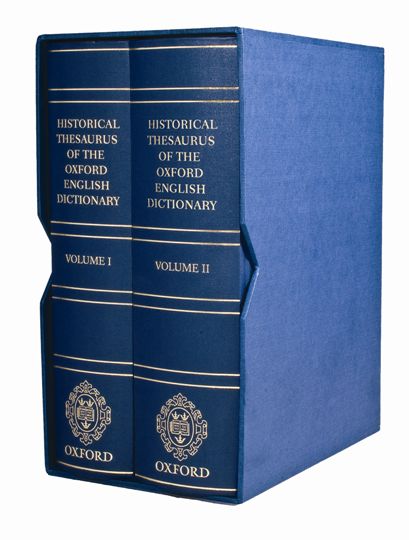
The current Oxford English Dictionary, most recently revised in 1989, contains over 600,000 words. It's claimed that the average college-educated English speaker typically has a working vocabulary of more than 100,000 words. They must have been talking about a previous era of college graduates, as many of the newer ones I've worked with seem to get by with a few orders of magnitude less than that number. Perhaps it's a sign of ongoing biological evolution. Language centers in the brain are shrinking beyond all sense of reasonable proportion, to the diminished size needed to minimally comprehend rap music lyrics.  (I have the two volume edition of this dictionary on the bookshelf next to my desk -- bet you were surprised!)

In 1930, C. K. Ogden (in collaboration with I. A. Richards) devised an ultra-truncated version of English. It consisted of just 850 words that could be learned in a few months and used to say anything. He called it Basic English (BE). It was demonstrated that practically anything could be said with these few words – even novels and scientific papers were written in BE. It never caught on.  Perhaps texting, email, cell phones, and a general lack of reading and writing may end up fulfilling Ogden's goal of Basic English.  If it happens, we will all be the poorer for it.


View article...


View article...

FW: Resources for Pastors and Others to Consider Regarding Same-Sex Marriage


Resources…


Feed: Cyberbrethren Lutheran Blog Feed
Posted on: Friday, May 11, 2012 5:15 AM
Author: Paul T. McCain
Subject: Resources for Pastors and Others to Consider Regarding Same-Sex Marriage


Helpful links and resources from the Manhattan Declaration folks….

Blessed are you when people insult you, persecute you and falsely say all kinds of evil against you because of me. Rejoice and be glad, because great is your reward in heaven. (Matthew 5:11)

Yesterday, for the first time, President Obama publicly affirmed his support for same-sex marriage, a calculated political maneuver intended to energize his base in the months before the November presidential election.

 At a time when most Americans' primary concern is their ability to work to provide for their family, as crippling debt, record deficits, and fragile global markets loom over the economy, the President seems intent on having a national conversation about life, love, and religious liberty.

So be it.

The Manhattan Declaration is a coalition of the historic Christian faiths united in support of the sanctity of every human life, marriage as the conjugal union of a man to a woman as the bedrock of society, and religious liberty as the cornerstone of freedom. We promote a culture of life, love, and liberty in many ways. One is to equip you, our advocates, with the best resources on these issues.

Below is
a list of ten articles and videos on the subject of marriage. Take an hour to skim them. Don't try to memorize the data or recite the arguments verbatim; rather, reflect on them. Allow your mind to absorb the broad principles. As the national conversation on this topic reaches a fever pitch in the next few days, you will be primed as a witness to the truth.

One final thought: this is not a war to be won in the blogosphere or on Facebook. We are teachers, co-workers, family members, and friends in relationship with those who have yet to see. Be gracious, be patient, and be kind.

"Blessed are you when people insult you, persecute you and falsely say all kinds of evil against you because of me. Rejoice and be glad, because great is your reward in heaven." (Matthew 5:11)

What is Marriage?

by Sherif Girgis, Robert George, and Ryan T. Anderson

Why I'm Optimistic About Natural Marriage

by Andrew Walker

Why Is Marriage Important? (video)

by John Piper

Who Needs Marriage?

by Chuck Colson

Marriage in Society: The Generation Clash (pps. 47-57)

by Matthew Lee Anderson

What Would Bonhoeffer Do?

by Eric Metaxas

Dennis Prager Debates Perez Hilton on Same-Sex Marriage (Warning: YouTube contains objectionable content)

Religion, Reason, and Same-Sex Marriage

by Matthew J. Franck

A Marriage in Full

by Gary A. Anderson

On Marriage and the Moral Limits of Human Sexuality

by Metropolitan Jonah

 They say we offer simple answers to complex problems. Well, perhaps there is a simple answer—not an easy answer—but simple: If you and I have the courage to tell our elected officials that we want our national policy based on what we know in our hearts is morally right. -Ronald Reagan, 1964


View article...


View article...