Thursday, January 28, 2016

Lutheran Book Review Quick Summaries: Africana Studies, the Pastoral Ministry, and Mysticism


Page, Hugh R. Jr., General Editor. Randall C. Bailey, Valerie Bridgeman, Stacy Davis, Cheryl Kirk-Duggan, Madipoane Masenya (ngwan'a Mphahlele), N. Samuel Murrell, and Rodney S. Sadler Jr., Associate Editors. The Africana Bible: Reading Israel's Scriptures from Africa and the African Diaspora. Minneapolis: Fortress Press, 2010. 358 Pages. Cloth. $39.00  http://store.augsburgfortress.org/store/product/1786/The-Africana-Bible

 Hughes, R. Kent. Douglas Sean O'Donnell, Contibuting Editor. The Pastor's Book: A Comprehensive and Practical Guide to Pastoral Ministry. Wheaton: Crossway, 2015. 592 Pages. Cloth. $45.00. https://www.crossway.org/books/the-pastors-book-case/ 

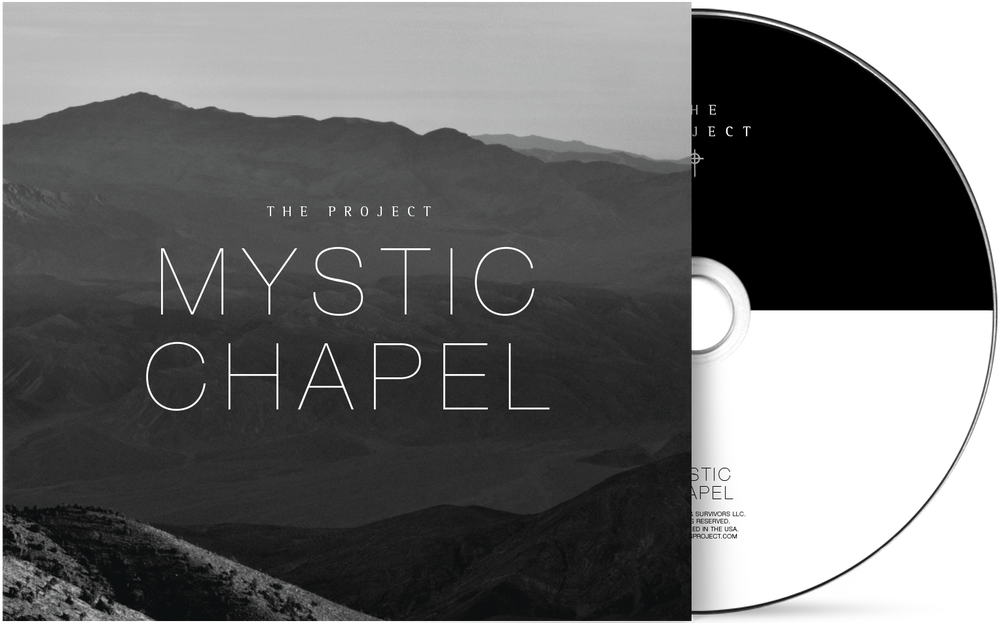
The Project. Mystic Chapel. Indianapolis: Saints and Survivors, 2015. $10.00. www.themartyrsproject.com


Quick Summaries are pithy paragraph-long reviews
of releases that cross our desk.

These are reviews for when you don't have all day 

to decide whether a resource is worth
your time, money, storage space, or trouble.


This set of quick summary reviews contains two that we requested and one that arrived unsolicited. 


For this set of reviews, we've expanded our coverage of the content of each book/CD.


A landmark volume, The Africana Bible gathers multicultural and interdisciplinary perspectives on every book in the Hebrew Bible. It opens a critical window onto the world of interpretation on the African continent and in the multiple diasporas of African peoples, including the African-American experience, with attention to Africana histories, literatures, cultures, and backgrounds for understanding biblical literature.

The Africana Bible features a critical commentary on every book of the Hebrew Bible, the Apocrypha, and Pseudepigrapha that are authoritative for many in African and African-diasporan communities worldwide. It highlights issues of concern to the global Black community (such as globalization and the colonial legacy) and the distinctive norms of interpretation in African and African Diasporan settings. (Publisher's Website)


 - The Africana Bible is our first Fortress title in some time. We will consider other titles in the future, but this one gave us pause. The General Editor is a "decidely liberal Anglican priest." The numerous contributors/associate editors have similar claimed pedigrees. A title that could be/is likely used in several "studies" departments at major universities and progressive seminaries, "The Africana Bible is an Afro-Diasporic midrash on the Bible" (11). If this terminology is unfamiliar to you, you are likely not the intended audience for the book. 

There are signs of potential historic orthodoxy with "hints" of reservation and new directions:

"[The] Christian believes that the Bible is the written Word of God. It is inspired by God, meaning that the thoughts of God were breathed into the holy men of God who spoke or wrote God's word. The Bible is the marvelous drama of God revealing himself to his people, and of the inspired prophets of God expressing that revelation in human thought forms" (Getui 1997:81).

Among Africans, Christians and non-Christians, the Bible is a liberative document... (25)

Consider also:

The reception of the scriptures of Israel into the Christian canon was an is marked by usupation, colonization, anti-Judaism, and anti-Semitism (47).

This tome may be valuable to our journal's readers as counter-example and evidence of modern thought on the Bible. Confessional Lutherans will find some neat tidbits, but not enough to merit the cost of the book.

Figure 1 (after page 214) shows Africa and the African Diaspora (the slave trade). No mention is made of Africans selling other Africans to Europeans. 

Figure 15 assumes YHWH is positively associated with Asherah. 

We wanted to see this title primarily for its treatment of the deuterocanonical and pseudepigraphic writings, especially those used in the Ethiopian context. (For more information on Lutheranism and reform in that nation, visit http://www.lcms.org/ethiopia) Only 44 pages were devoted to these texts. Wikipedia may be more helpful to other readers. Most surprising to me was for Fortress, a Lutheran publishing house, to allow the Introduction to this section (293-295) to mention Wittenberg and the apocrypha, but so obviously (intentionally?) leave out one Martin Luther, whose comments should have been welcome and informative here. He recommended the Apocrypha as books that are profitable and good to read, yet texts that are not regarded as equal to the Holy Scripture.

If you are looking for an introduction to the Old Testament that references its use in Africa or African Diaspora communities that is Christocentric, keep looking. Instead, pay Tom Oden a visit over at http://www.earlyafricanchristianity.com/ and consider the work (https://www.cph.org/p-22685-i-am-not-afraid-demon-possession-and-spiritual-warfare.aspx) of Robert Bennett on Madagascar.


Table of Contents

Part 1: Christian Gatherings

  1. Sunday Worship
  2. Annual Services
  3. Weddings
  4. Funerals

Enrichment: Poetry to Enhance Preaching and Worship

Part 2: Parts of the Worship Service

  1. Public Prayers
  2. The Historic Christian Creeds
  3. Hymns and Songs
  4. Baptism
  5. Communion

Part 3: Ministerial Duties

  1. Pastoral Counseling
  2. Hospital Visitation

Appendix: Sample Wedding Services from Various Churches (Publisher's website)

 
/ Books designed to be "seminary in a box" are generally disappointing (http://lhpqbr.blogspot.com/2010/03/pulpit-review-distance-education.html). That said, such volumes are not generally intended for an audience of Lutherans. The Pastor's Book is no exception to either rule. Yet, I was pleasantly surprised by aspects of this volume by Hughes and O'Donnell.

There is an intention to focus upon worship and pastoral care and "encourage a thoroughly gospel-centered ministry; refresh the church from the wells of historic orthodoxy; provide many of the best practical examples; and become a go-to resource for busy pastors" (19).

I would offer some pointed critique. There is an overwhelming Calvinist taste to the book. The reference to the rise of the pulpit in prominence is true of the Reformation (41), yet not at the expense of the altar in the Lutheran reformation. The entire chapter on Baptism (373ff) is utterly inadequate for Lutheran use. The "disparate" approach is unhelpful given what Scripture says about baptism, and will be confusing to readers who will likely resonate with their own preconceived perspective. 

My most significant concern with the book is in the Communion chapter (417ff), also inadequate for Lutheran use, unnecessarily inaccurate, and slanderous. Please turn to page 422. "The Reformers rejected the doctrine of transubstantiation out of hand. Luther replaced it with consubstantiation..." The former is true. The latter is not. 

No Lutheran uses the term "consubstantiation." We reject it "out of hand." The term is an attempt by non-Lutherans to describe our understanding of the Sacrament of the Altar as a mere philosophical theory like the rejected philosophical theory of transubstantiation. Authors, editors, and fellow readers, do not insult, offend, denigrate, or misunderstand Lutherans by continuing your use of this term. As a reviewer, I'll bring it up every time I see it. Disagree with us if you must, but do not presume to tell us (and others) what we believe, teach, and confess in a way that we will everywhere and always reject and refute. That's not respectful or fair.  

Turn to Matthew 26:26. Read the whole of Jesus' Words of Institution. What does He take? What does He say it is? What else does He take in the context of the Jewish Seder? (Remember: pasteurized grape juice did not exist yet.) What does He say it is? And for what purpose are we to eat and drink according to His command and invitation? Don't condemn me for taking Jesus at His Word!

As I dismount my soapbox, I must note that I was heartened to see Lutheranism represented in liturgical examples from the 1982 hymnal of The Lutheran Church--Missouri Synod, Lutheran Worship. I would have been more impressed in a 2015 book to see references to our 2006 hymnal Lutheran Service Book. The author/editor was fair in explaining our objection to eulogies at funerals (192-193). I would add that eulogies originated in traditions where works mattered for the deceased's own salvation, contradicting "Christ Alone."


Personally, I also welcomed frequent references to the hymnody of Getty and Townend and the conscious attempt to reintroduce the Church year, historic liturgical forms, and the wealth of Christian hymnody and song to the volumes readers.

We wanted to see what was going on in pastoral care among today's conservative evangelicals. And so we did. There is improvement, room for hope for outside observers like us Lutherans, and perhaps even those who would be willing to listen to and learn from us.


What if we still believed? (Publisher's website)

/+ We reviewed the previous album by The Project some time ago (http://lhpqbr.blogspot.com/2014/07/quick-summaries-calvin-apostates.html). 

I was taught once by a seminary professor that "Mysticism begins the mist, centers on 'I', and ends in schism." Pithy, that. Mystic Chapel is likely named thus because of the "Prelude" and "Postlude" tracks bookending the album, which provide an instrumental "mystical" auditory experience. That, and Retro Guitar Chapel Praise Music just isn't a great title. 

Now, down to specifics. Track 2 is a "call to worship" with a recognizable Kyrie and trinitarian ending with intentionally chosen language: "Now and forever/Unto ages of ages. Amen. Amen." Track 3 is what my readers will recognize as the text of the Phos Hilaron from Evening Prayer. Track 4 is a version of the Easter Proclamation that can be added to the end of Lutheran Service Book Morning Prayer. Track 5 is a resurrection-themed praise song: "Death Is Destroyed." Track 6 is Marian, a retelling of the Annunciation by Gabriel. I was uncomfortable with "Have joy, unwedded bride" and the overall directing of language toward Mary. Track 7 returns to the praise genre, singing of mercy in Christ: "From on high merciful Savior/From on high thou didst descend." Track 8 is a paraphrase of the Lord's Prayer.


The musicians are highly-skilled. This appears to be their attempt to reconcile their personal musical style with Biblical truth and liturgical texts. Their words challenge us to hold onto the faith once delivered to the saints, especially the virgin birth and resurrection of Jesus. Style may be jarring for our typical readers, not what they're accustomed to on Sunday mornings or Wednesday evenings. I can report that it was enjoyable road trip music at 4 a.m. on a drive across Wyoming.

Rev. Paul J Cain is Pastor of Immanuel, Sheridan, Wyoming, Headmaster of Martin Luther Grammar School and Immanuel Academy, a member of the Board of Directors of The Consortium for Classical and Lutheran Education, District Education Chairman and Editor of Lutheran Book Review. A graduate of Concordia Seminary, St. Louis, Rev. Cain is a contributor to Lutheran Service Book, Lutheranism 101, the forthcoming LSB Hymnal Companion, and is the author of 5 Things You Can Do to Make Our Congregation a Caring Church. He has previously served Emmanuel, Green River, WY and Trinity, Morrill, NE. He is married to Ann and loves reading and listening to, composing, and making music.


View article...

Received for Review


Smith, Gordon T. Consider Your Calling: Six Questions for Discerning Your Vocation. Downers Grove: IVP Books/InterVarsity Press, 2015. 128 Pages. Paper. $16.00. http://www.ivpress.com/cgi-ivpress/book.pl/code=4607 (UN)

Macchia, Stephen A. Broken and Whole: A Leader's Path to Spiritual Transformation. Downers Grove: IVP Books/InterVarsity Press, 2015. 220 Pages. Paper. $16.00. http://www.ivpress.com/cgi-ivpress/book.pl/code=4606 (UN)


View article...

Lutheran Book Review: Fiction and Film


Keating, Ray. Murderer's Row: A Pastor Stephen Grant Novel. Manorville, NY: Keating Reports, 2015. 364 Pages. Paper. $15.99. (Kindle version: $6.99.)  www.pastorstephengrant.com  http://smile.amazon.com/Murderers-Row-Pastor-Stephen-Grant/dp/1514137615 (LHPN)


Goodlett, Paula and Gorg Huff. 1636: The Barbie Consortium (Ring of Fire book 18). Riverdale, NY: Baen, 2013. Kindle e-book. $4.99. http://www.baen.com/  http://smile.amazon.com/1636-Barbie-Consortium-Ring-Fire-ebook/dp/B00PB7JTHC/ (N) 


Flint, Eric, Paula Goodlett, and Gorg Huff. 1636: The Viennese Waltz (Ring of Fire). Riverdale, NY: Baen, 2014. 427 Pages. Kindle e-book. $9.99. http://www.baen.com/  http://smile.amazon.com/1636-Viennese-Waltz-Ring-Fire-ebook/dp/B00OKE7PRI/  (N) 

Flint, Eric and Charles E. Gannon. 1636: Commander Cantrell in the West Indies (Ring of Fire). Riverdale, NY: Baen, 2014. 624 Pages. Kindle e-book. $9.99. http://www.baen.com/  http://smile.amazon.com/1636-Commander-Cantrell-West-Indies-ebook/dp/B00KDGKZEW/  (N) 

(The books above are available in digital and paper formats.)

Grantville Gazette, Volumes 51-63. Moore, OK: 1632, Inc., 2014-2016. Digital downloadable file (various formats). Subscription rates vary. http://www.grantvillegazette.com/ (N)


Who Is John Galt? Atlas Shrugged III. Atlas Productions, Inc., 2014. Special Edition 2-disc DVD set. http://www.whoisjohngalt.com  (N) 


I love sitting down to a great novel or a fun movie. Here are a few candidates for those descriptions.

We first visit LCMS Pastor Stephen Grant.


Keating's fictional character Grant, a former Navy SEAL and CIA operative and a current LCMS Pastor, is the subject of five novels.  The latest, Murderer's Row pits Grant against politicians and terrorists in the midst of murders and minor league baseball in New York.


I miss Tom Clancy. Keating fills that void for me. Yes, I understand that the bad guys will use colorful metaphors, yet toning down their language wouldn't ruin Keating's plausible, realistic scenes. Keating deals with timely issues like political corruption, abuse of eminent domain, terrorists who sneak into our country, the consequences of bad decisions, the after effects or real violence, and the need for good people to stand for truth, protect the weak and innocent, and proclaim the forgiveness of sins in Jesus Christ.


My favorite of the series is still the debut novel, Warrior Monk, but this novel is still a solid entry in the series and only whets my appetite for more.


Recently, Atlantic District Pastors paid us a visit in the Wyoming District for a second Koinonia Conference. If you look closely at the participants in the shooting sports event, you might even spot a smiling Rev. Stephen Grant.


And now, for something completely different:

 
Our next four titles take place in an alternate universe where West Virginians from the year 2000 have made a major impact on life in Germany and Europe as a whole in what was the Thirty Year's War. They saved the life of Gustavus Adolphus, King of Sweden, now also Emperor of the United States of Europe in this new timeline. I love the series because Lutherans have big roles.


The Barbie Consortium is one of my favorite titles in the series to date, though I think of the adventures of these young women under the title Other Peoples' Money, since that may more accurately describe the impact of a group of Grantville teenage girls in economics, industry, finance, and the stock market. You can learn a lot about entrepreneurship and the way money works in this title. 


The Viennese Waltz is as close to a sequel to the previous book as you can get in the 1632 universe, so read Barbie first. The economic story of central Europe is expanded as a 17th Century national leader makes a deal to buy a 20th Century race car. All involved, from central bankers and royalty to American mechanics and teen investors "waltz" to avoid economic disaster and a terrorist attack. Perhaps Austrian Economics could be a title for a collection of their further adventures.


1636: Commander Cantrell in the West Indies really gave me a sense of the "butterfly effect." This is the idea that small changes early on can lead to unbelievably large changes as time passes. About four years after their arrival, the projected future history of the Caribbean, North America, and South America is going to be radically different. Readers will appreciate the military adventures of the title character as well as the romantic and political ramifications of his marriage to the daughter of a king (not a princess).


Finally, this reader really likes to see the middle ground between official publications by Baen, publisher of the main 1632 titles, and fan fiction. Visit https://grantvillegazette.com and marvel at the aggressive publication schedule of this creative, multiple-volumed, well-researched, and very successful experiment in publishing. I'll admit my bias. My favorite story is about the appearance of Concordia Triglotta in this new timeline (https://grantvillegazette.com/wp/?s=Concordia) at the Rudolstadt Colloquy. I watch for appearances of THE Johann Gerhard as well.


We conclude this set of quick summaries with our film, part three of Atlas Shrugged.


We've reviewed parts one (http://lhpqbr.blogspot.com/2011/04/noted-review-what-if-atlas-shrugged.html) and two (http://lhpqbr.blogspot.com/2013/04/at-movies-atlas-2.html) in previous posts.


I wanted to like this film. "From each according to ability, To each according to need" does not work in practice. "I was only following orders" is no excuse for horrific behavior. There is a lot about forced redistribution of wealth and critique of socialism that the film gets right.


I must admit disappointment. Galt's monologue just didn't work in the abbreviated form portrayed in the film. Granted, it's far too long in the novel for many and would be nearly impossible to get right in another medium.


Fans of Ron Paul, Glenn Beck, and Sean Hannity smiled to see their cameos, but we once again had a new cast for the main characters of Rand's tale. Laura Regan played Dagny Taggart, Kristoffer Polaha was John Galt, Joaquim de Almeida portrayed Francisco d'Anconia, Eric Allan Kramer gave us Ragnar Danneskjöld, and Rob Morrow was Henry "Hank" Rearden. This was confusing. Trying to put the best construction on this "three casts for three parts" idea, it could have been intended to show the timelessness of these characters. If so, it didn't work. There's a difference between recasting for Star Trek and low-budget dystopian fiction.


Further, the production values seem to be best for part two.  Part three fell short and strained credulity, especially in the "rescue scene" near the end. Without intending to, that scene seemed to be a parody of itself. And, as a substitute "crucifixion" scene, it also fell short.


With the trilogy now complete, I must say that I am thankful that more people know this story. I can appreciate a secular attempt to wake up America to the fact that you eventually run out of other peoples' money to spend. From a Christian perspective, I mourn the selfishness of Rand's worldview. I cannot in good conscience, take the oath "I swear by my life and my love of it that I will never live for the sake of another man, nor ask another man to live for mine."


Repeating what I have written before in my previous reviews: 

The book and film are decidedly anti-vocation. The Christian doctrine (and practice) of vocation is that we are blessed in order to be a blessing to those around us. A Christian's First and Foremost relationship is with the Triune God. That relationship is all about what God in Christ has done for us as Savior and Deliverer of His Gifts. Second, we are born into (or adopted into) a human family. We honor father and mother and other authorities as long as we are not in conflict with Scripture. "We must obey God rather than men" (Acts 5:29). The marital bond is nourished for its own sake, as well as children in the family. Third comes our "vocations" as in the typical secular sense, our jobs, careers, etc.  Fourth, we find our hobbies, avocations, sports, and even our service to our Lord. Theologically and practically, this should help avoid any semblance of "works righteousness. I have often met "burned out" Church volunteers and even Church Workers. At times, we all have forgotten that Christianity is more about what God does for us than what we do for Him. Works may not be necessary for salvation, but they are necessary, as the hymn sings: "For faith alone can justify; Works serve our neighbor and supply the proof that faith is living" (Lutheran Service Book 555:9, "Salvation unto Us Has Come," by Paul Speratus).

The major difference between property and "helping the less fortunate"  in Communism/Socialism/Marxism and Christianity is that the "isms" of a State compel compliance. Christianity is Gospel-motivated, not expecting repayment. Christians share because they want to. A Marx-dominated government forces its populace to do so.

This is a message for our day and our nation. In fact, it may help us see the ridiculous of the 99%/1% narrative of recent years. If we are honest, ALL Americans are part of the global 1% AND the 1% wealthiest of all human history.

Too often selfishness is allowed to pass for self-reliance. May I offer a different solution? The doctrine of vocation! Christ came to to be served but to serve and give His life as a ransom for many. We cannot accomplish our own salvation, nor the salvation of others, but we are given to serve our neighbor in a Christlike way. That is a vocational responsibility Christians dare not shrug off.


Watch the film if you remember Ayn Rand from your college days. Manage your expectations. Remember the insights you valued back in the day. And teach others a better way than Ms. Rand: Christian vocation.

Rev. Paul J Cain is Pastor of Immanuel, Sheridan, Wyoming, Headmaster of Martin Luther Grammar School and Immanuel Academy, a member of the Board of Directors of The Consortium for Classical and Lutheran Education, District Education Chairman and Editor of Lutheran Book Review. A graduate of Concordia Seminary, St. Louis, Rev. Cain is a contributor to Lutheran Service Book, Lutheranism 101, the forthcoming LSB Hymnal Companion, and is the author of 5 Things You Can Do to Make Our Congregation a Caring Church. He has previously served Emmanuel, Green River, WY and Trinity, Morrill, NE. He is married to Ann and loves reading and listening to, composing, and making music.


View article...

Friday, January 15, 2016

Received for Review


Weinrich, William. John 1:1-7:1 (Concordia Commentary). St. Louis: Concordia, 2015. 863 Pages. Cloth. $54.99. https://www.cph.org/p-7379-john-1171-concordia-commentary.aspx

The Project. Mystic Chapel. Indianapolis: Saints and Survivors, 2015. $10.00. www.themartyrsproject.com


View article...

Tuesday, December 22, 2015

Received for Review


Weinrich, William. John 1:1-7:1 (Concordia Commentary). St. Louis: Concordia, 2015. 863 Pages. Cloth. $54.99. https://www.cph.org/p-7379-john-1171-concordia-commentary.aspx

Page, Hugh R. Jr., General Editor. Randall C. Bailey, Valerie Bridgeman, Stacy Davis, Cheryl Kirk-Duggan, Madipoane Masenya (ngwan'a Mphahlele), N. Samuel Murrell, and Rodney S. Sadler Jr., Associate Editors. The Africana Bible: Reading Israel's Scriptures from Africa and the African Diaspora. Minneapolis: Fortress Press, 2010. 358 Pages. Cloth. $39.00  http://store.augsburgfortress.org/store/product/1786/The-Africana-Bible


View article...

Wednesday, December 16, 2015

Received for Review


Hughes, R. Kent. Douglas Sean O'Donnell, Contibuting Editor. The Pastor's Book: A Comprehensive and Practical Guide to Pastoral Ministry. Wheaton: Crossway, 2015. 592 Pages. Cloth. $45.00. https://www.crossway.org/books/the-pastors-book-case/ 


View article...

Friday, December 11, 2015

Volume Ten!


This post will mark the last entry in
LBR/LHPQBR Volume 9,
and the opening entry in Volume 10
of Lutheran Book Review.


Visit Lutheran Book Review at
 http://lhplbr.blogspot.com/


View article...

Sunday, November 22, 2015

Liturgy and Hymnody Review: 2011 GIA Hymnals


Worship-Fourth  Edition (Pew edition with readings)
. Chicago: GIA Publications, 2011. Cloth. $16.50. http://www.giamusic.com/sacred_music/hymnals_start.cfm (LHP)

Worship-Fourth  Edition (Keyboard landscape edition). Chicago: GIA Publications, 2011. Cloth. Two Volumes. $120.00. http://www.giamusic.com/sacred_music/hymnals_start.cfm (LHP)


Worship-Fourth  Edition (Bb instrument edition). Chicago: GIA Publications, 2011. Spiral. $90.00. http://www.giamusic.com/sacred_music/hymnals_start.cfm (LHP)


Gather-Third  Edition (Pew edition with readings). Chicago: GIA Publications, 2011. Cloth. $16.50. http://www.giamusic.com/sacred_music/hymnals_start.cfm (LHP)


Gather-Third  Edition (Guitar edition). Chicago: GIA Publications, 2011. Spiral. Three Volumes. $90.00. http://www.giamusic.com/sacred_music/hymnals_start.cfm (LHP)


When I was on vicarage, I intended to visit every Lutheran and liturgical congregation in the community. I accomplished that goal, gathering brochures and bulletins from a variety of ELCA, Roman Catholic and Episcopal congregations, plus many other congregations of various denominational names. I was able to witness a Roman Mass in Latin and a Roman cathedral using an early version of Worship from GIA.


With the revised Roman order of Mass (http://revisedromanmissal.org/News/articleType/ArticleView/articleId/43/Four-GIA-Hymnals-Slated-to-Coincide-with-Implementation-of-the-Revised-Order-of-Mass.aspx), there was a need for publishers to update their hymnals. Let's examine two from GIA.

The wide range of GIA editors, both full-time staff members and those working on specific projects, have been working overtime to develop new hymnals for the twenty-first century Church. Each of these projects will reflect the high standards the Church has come to expect from GIA hymnals. Each will have a unique focus designed to meet the needs of diverse American Catholic communities. All are truly comprehensive hymnals (featuring musical diversity), two are designed to serve multicultural communities; and one is the first-ever cover to cover bilingual, English-Spanish hymnal (Publisher's press release, posted on August 09, 2010).


Back in 2008 (Liturgy, Hymnody, & Pulpit Quarterly Book Review Volume 2, Issue 4, Angels' Tide, 2008), we reviewed the previous version of Worship.

LHP Review
Worship: A Hymnal and Service Book for Roman Catholics (Third Edition, Choir Edition). Chicago: GIA Publications, 2001. Cloth. $23.00. www.giamusic.com (LHP)

Intended for Roman Catholic parishes, Worship, Third Edition is a unique thing—a hardcover hymnal instead of a disposable newsprint quarterly missal. That switch alone would teach a congregation much about our Christian heritage in Church music as well as catechize them toward a better theology of worship.


There are Lutheran influences evident from a Lutheran Worship psalm tone for Psalm 6, liturgical music by Richard Hillert (271, 458), the LBW version of "From Heaven Above" (388), Martin Franzmann's "Thy Strong Word" (511), "All Glory Be to God on High" (527), and even "Weary of All Trumpeting" (635). Lutherans will also recognize the Vajda/Schalk collaboration, "Now the Silence" (668). Martin Luther's most famous hymn appears as the three stanza "God Is Our Fortress and Our Rock" (576), a 1982 Michael Perry translation copyrighted by Hope Publishing Company.


Particularly impressive is an index of Hymns for the Church Year (1205), building upon the Lutheran contribution of the "Hymn of the Day." There are many hymns on the list we have in common throughout the Three-Year Series.


After an initial section for the Liturgy of the Hours, the psalter is supplemented with numerous canticles and a first-hand view of the Rite for Christian Initiation of Adults (100). I do not believe the Bible's theology of Holy Baptism supports such a piecemeal initiation process, but Lutherans can learn how to better connect a catechumen (youth or adult) with the congregation throughout and following catechesis.


Petitions to anyone other than God (109, hymns 421, 443, 693, 711, 1202, et al) should be abandoned.


Reconciliation (125) is a good Gospel word for "Confession and Absolution," yet penitents should be taught that confession is made for the sake of absolution.


The Order of Mass, Divine Service, begins on 229. Much will be familiar to Lutherans. While I personally like seeing the Nicene Creed beginning "We believe…" because that is the original text, the Apostles' Creed (239) should remain "I" rather than "We" for the same reason. Additional musical settings (and parts of settings) follow.


Worship is ahead of its time by continuing to include Latin-language liturgical music (340ff). Pope Benedict would be pleased. Even in Bach's day, Lutherans still used Latin texts (at least occasionally) for the Daily Office and Divine Service. "O Come, All Ye Faithful" (392) is also presented as "Adeste Fideles," memorably sung by Bing Crosby. "Lift Up Your Heads, O Mighty Gates" (363) is a much better text to pair with the tune TRURO than with the weak Easter text, "Christ Is Alive" (466).


A section for liturgical propers begins on 765. Users of LW and LBW will note similarities to the front of those hymnals. For Palm Sunday and the Triduum, Holy Week, resources are notably and appropriately expanded.


Prayers of the Individual and Household (1152) are extensive and are weakened only by invocations of saints and angels rather than Father, Son, and Holy Spirit.


An index of Scripture Passages Related to Hymns (1204) will be a welcome feature for regular users of the hymnal as well as other Christians mining it for resource suggestions.


I also liked the off-white paper inside and ribbon to the visually and tactile-rich red cover.


QBR requested a review copy of this hymnal because it is a Choir Edition. It makes me more thankful for the hymnals I've used at worship over the years, The Lutheran Hymnal, Lutheran Worship, and Lutheran Service Book, all hymnals with the majority of the music presented in four-part (choir-like) harmony. LSB was supposed to have a "Choir Edition." It probably won't ever appear. I'm still curious, though. Given the similarities between this Worship: Choir Edition and the final form of LSB, what would a LSB: Choir Edition have looked like?


Yes, there is a greater expense to this choir version than the usual pew copies of Worship, Third Edition, but I encourage parishes that are considering a purchase of this hymnal to buy all choir editions, or to buy only choir editions from this point on. If you buy them, and teach the people, they will sing! Harmony is a beautiful thing.


In addition, I would encourage GIA to include harmony parts on as many hymns and psalms as possible in Worship, Fourth Edition.


PJC


With the arrival of Worship—Fourth Edition, let's consider how GIA got here:

The tradition of Worship hymnals began in 1971. Worship II and Worship—Third Edition followed in 1975 and 1986, respectively. Together, they account for the greatest number of GIA hymnals used in Catholic parishes over these years, with hundreds of thousands of the latest edition still in use. It is fitting, then, that our newest top-of-the-line hymnal should be its fourth edition. Lots will be new! Unlike its two most recent predecessors, the Fourth Edition will be comprehensive, much in the style of GIA's RitualSong. While it will include a substantial collection of the finest organ-based hymnody, it will also include the best-loved contemporary music, and shorter "world music" pieces; a significant amount of the core material will have Spanish translations. The single feature about which we are most enthusiastic, though, is its wide-range exploration of hymn texts by modern writers—those writing for today's church. For immediate accessibility, a majority of these hymns will be matched with well-known, well-loved tunes.


The five editors—Kelly Dobbs Mickus, senior editor, Robert Batastini, Fr. James Chepponis, Charles Gardner, and Fr. Ronald Krisman—have devoted a tremendous amount of energy and expertise to assembling an outstanding body of hymns matched to each Sunday of the three-year Lectionary. While these hymns will be distributed thorughout the book according to thematic category, the Hymn of the Day calendar will point directly to an exceptionally appropriate hymn for each Sunday and solemnity of the church year, with tunes that are likely to be familiar.
(Publisher's press release)

We had the opportunity to see different volumes of the Worship library than last time. While we appreciated a fuller music edition in the choir edition of W3, imagining what a Lutheran Service Book: Choir Edition could have been, the Three-Year Lectionary Readings printed in the back of our review pew copy of W4 remind us of the days when German Lutheran hymnals had room for the Historic Lectionary readings, the creeds, Small Catechism, and an account of the destruction of Jerusalem. Having God's Word in the ears and eyes of His people at liturgy is a great thing!

Lutherans will note a couple hymns by Lutheran other Lutherans including "This Is the Feast" and "A Mighty Fortress." Hymns for the Church Year (1231ff) profitably carry beyond Lutheranism the idea of the Hymn of the Day. I am curious/concerned about a Dakota hymn included in the collection (575). The text needs context and more Christian specificity to avoid any appearance of unionism or syncretism.


The durably-constructed organ edition has guitar chords on some hymns, songs, and liturgical pieces. It could be used by as a lead sheet edition by a keyboard player, guitarist, or even by an LCMS guitarist in conjunction with Lutheran Service Book. (Search for hymn tune titles to find music in common between the two hymnals.)

 
In the same way the available Bb edition for trumpet, clarinet, tenor sax could be used in conjunction with LSB for Lutheran worship. We appreciated reading the following in the introduction to the comprehensive spiral-bound single volume:

Two principal approaches have been used in developing this collection. For classical, organ-based hymns, the instrumental part is most often in the form of a trumpet descant. For piano/guitar-based songs, the instrumental part is most often conceived as woodwind material. All parts, of course, are theoretically playable on any melody instrument, subject to range and technical feasibility. In order to accommodate the range of various instruments, the parts have frequently been printed in octaves.

As a trumpet player, I will make use of the Bb Instrument volume of Worship: Fourth Edition!

As I am a Lutheran reviewing a worship resource intended for Roman Catholic parishes, my previous criticisms and commendations (noted above in our 2008 review) are hereby repeated.


Gather—Third Edition


Though having a somewhat shifted emphasis from Worship, our Gather hymnals, especially the green Gather Comprehensive, have enjoyed unprecedented adoption by parishes across America for a single hymnal edition.  Our plans to produce a revised version of Gather Comprehensive—Second Edition have prompted some feedback, and we are now planning instead a new edition called Gather—Third Edition.

Gather—Third Edition will contain many new and revised Mass settings to coordinate with the revised Order of Mass. In addition, GIA wishes to take advantage of the many new titles which have been published since 2004 (when Gather Comprehensive—Second Edition was released) by including 75 new titles in the section of hymns and songs. This third edition of Gather will retain the balance of the two previous editions of Gather Comprehensive: approximately 70% piano/guitar based titles and 30% organ-based.
(Publisher's press release)

The above gives a good summary of what makes Gather distinct from Worship.

Our pew edition also had the Three-Year Lectionary readings. Core hymns were similar to W4. The different composition of Gather meant that we were given a guitar chord edition, a resource that would also function well as a lead sheet edition for a pianist. And, as I mentioned above with Worship's organist edition, could be used in conjunction with LSB in my tradition and congregation.

A few other observations are in order. the Gather guitar edition makes up three spiral-bound volumes! Thinking creatively, this could be purchased and used as a Large Print edition of Gather! For hymns and songs in difficult (for guitar) keys, capo chords are suggested. Perhaps, for Gather: Fourth Edition, the melody could be provided in the capo chord keys for convenience on select songs and hymns.


Gather does provide some hymns and songs in better keys for singing and accompaniment than my LSB. I'll take them to my music shelf at church for future use there on Sundays, Wednesdays, and festivals!


Last year, we reviewed (http://lhpqbr.blogspot.com/2014/03/quick-summaries-marathon-look-at.html) an additional GIA hymnal:

Lead Me, Guide Me—Second Edition

This revision has been a long time coming, and we guarantee it will be worth the wait. The project began some years ago with a discernment meeting chaired by Archbishop Wilton Gregory and attended by a distinguished group of African-American clergy, liturgists, musicians, and GIA staff.  It gave focus to the revision and spwned a core committee consisting of Msgr. Raymond East, chariman; Robert Batastini, project coordinator; Dr. James Abbington; Marcia Berry; Richard Cheri; Dr. Norah Duncan IV; Sr. Joan Angela Edwards, SSM; Kenneth Louis; and Fr. J-Glenn Murray, SJ. While the original Lead Me, Guide Me was subtitled "The African-American Catholic Hymnal," the new edition recognizes that many communities, while being predominantly African-American, are in fact significantly multicultural. Lead, Me Guide Me II will be significantly expanded from the original in that it will include the full breadth of African American church music that is suitable for Catholic worship, a representative selection of music from Africa and the Caribbean, and a large cross-section of the common Catholic repertoire of our day. The latest music editing advances have enabled significant strides toward printing the music to reflect performance practices in the African American church more than in the first edition of this hymnal.

The new LMGM will have a complete three-year set of Lectionary psalms composed by some of today's finest African American composers.

(Publisher's press release)


One of the great blessings of all three hymnals is a common musical setting for Mass. We have now seen it in Lead Me, Guide Me II (98ff), Worship IV (202ff), and Gather III (166ff). We would love to see how this is presented in GIA's bilingual hymnal.


This is good, right, and salutary! Generations of Lutherans in America have benefited from the Common Service and a few common ways of singing the texts of the liturgy.

I could imagine an edited version of this GIA common setting for the Order of Mass. being made available for Lutheran, Anglican, and Episcopal congregations by GIA in the near future.


Rev. Paul J Cain is Pastor of Immanuel, Sheridan, Wyoming, Headmaster of Martin Luther Grammar School and Immanuel Academy, a member of the Board of Directors of The Consortium for Classical and Lutheran Education, District Education Chairman and Editor of Lutheran Book Review. A graduate of Concordia Seminary, St. Louis, Rev. Cain is a contributor to Lutheran Service Book, Lutheranism 101, the forthcoming LSB Hymnal Companion, and is the author of 5 Things You Can Do to Make Our Congregation a Caring Church. He has previously served Emmanuel, Green River, WY and Trinity, Morrill, NE. He is married to Ann and loves reading and listening to, composing, and making music.


View article...

Quick Summaries for November 2015: Hymns, Chants, and Spiritual Songs


Anslie, John, composer. English Proper Chants (Melody Edition). Collegeville: Liturgical Press, 2015. 230 Pages. Paper. $24.95. www.litpress.org (L)


Anslie, John, composer. English Proper Chants (Accompaniment Edition). Collegeville: Liturgical Press, 2015. 229 Pages. Spiral. $29.95. www.litpress.org (L)


Rowthorn, Jeffry and Russell Schulz-Widmar, Compilers and Editors. Sing of the World Made New: Hymns of Justice, Peace and Christian Responsibility. Carol Stream, IL/Chicago: Hope Publishing Company/GIA Publications, 2014. 297 Pages. Spiral. $18.95. http://www.giamusic.com/search_details.cfm?title_id=20518 (H)


Schalk, Carl. Sing with All the Saints: Twenty-one New Hymns and Carols for Congregation, Choir, and Accompaniment. Chicago: GIA Publications, 2014. 59 Pages. Staple. $12.00. http://www.giamusic.com/search_details.cfm?title_id=23480 (H)


Jones, Jacque B. Songs Unchanged, Yet Ever-Changing: 50 Hymn Texts. Chicago: GIA Publications, 2014. 128 Pages Spiral. $19.95.  http://www.giamusic.com/search_details.cfm?title_id=23892 (H)

Quick Summaries are pithy paragraph-long reviews
of releases that cross our desk.

These are reviews for when you don't have all day 

to decide whether a resource is worth
your time, money, storage space, or trouble.


 +/ Possibly useful to liturgical, confessional Lutheran congregations, English Proper Chants provides Entrance Antiphons and Communion Antiphons for each liturgical proper for Mass in the Roman Missal. LCMS cantors, pastors, or choirs could sing the simple yet sublime antiphons to bookend Psalms used as the Introit, Gradual, or Offertory of the Day. Intended for the Three-Year Lectionary, they could be adapted for the Historic One Year Lectionary. Accompaniment is available and beautiful, yet optional.  This is an intentional "adaptation of Gregorian chant for use with English texts..."

/ I found more to appreciate than I expected to in Sing of the World Made New: Hymns of Justice, Peace and Christian Responsibility. Six sections make up the spiral-bound collection: Creator and Creation, Peace and Reconciliation, Justice and Human Need, Dignity and Diversity, Commitment and Service, Hope and Expectation. I was familiar with a few Taize titles that I could/would use, a beloved (yet difficult in so many ways) text/tune "Weary of All Trumpeting," the familiar "Hail to the Lord's Anointed," "God of Grace and God of Glory," "For the Fruit of All Creation," "For All the Faithful Women," "When Israel Was in Egypt's Land," and "How Clear Is Our Vocation, Lord." The hymns I have cited above are currently in Lutheran Service Book or one of its predecessor hymnals or supplements. Some were included in the current LCMS hymnal because of their confession of the core of the Christian faith: Jesus Christ and the Gospel. This collection may yet yield a few tunes or texts that wear well and fill gaps in current hymnals, but many are far too mainline progressive or politically correct for my taste.

- /  Songs Unchanged, Yet Ever-Changing: 50 Hymn Texts by Jacque B. Jones includes strong hymns on historic, Biblical Christian themes like "I Am the Bringer of Living Water,"  "Peace of God Beyond our Knowing," and an unique hymn about Peter from his denials of Christ to restoration by Christ, "Seeking Warmth from Charcoal Blazing." Such hymns are in the same collection as others celebrating the ordination of women in the United Methodist Church (102-3), "celebrating religious diversity and encouraging interfaith communications" (24-5), and an overall sensitivity to "social justice issues" (4, passim).     

+ GIA is to be commended for publishing the hymns and carols of Carl Schalk. The latest collection, Sing with All the Saints, features 21 hymns and carols with texts by Herbert Brokering, William Cowper, Timothy Dudley-Smith, Paul Gerhardt, John Mason Neale, David Rogner, and Jaroslav Vajda, among many others.  Schalk succeeds as a hymn tune composer because of his memorable melodies that strike the right balance between pleasing predictability and Brokering-like singable surprise. My favorite was the Gerhardt text, "Commit Thy Way, Confiding," set to Schalk's WEST SEATTLE. Pick up a set for your choir!


Rev. Paul J Cain is Pastor of Immanuel, Sheridan, Wyoming, Headmaster of Martin Luther Grammar School and Immanuel Academy, a member of the Board of Directors of The Consortium for Classical and Lutheran Education, District Education Chairman and Editor of Lutheran Book Review. A graduate of Concordia Seminary, St. Louis, Rev. Cain is a contributor to Lutheran Service Book, Lutheranism 101, the forthcoming LSB Hymnal Companion, and is the author of 5 Things You Can Do to Make Our Congregation a Caring Church. He has previously served Emmanuel, Green River, WY and Trinity, Morrill, NE. He is married to Ann and loves reading and listening to, composing, and making music.


View article...